 Nafisa
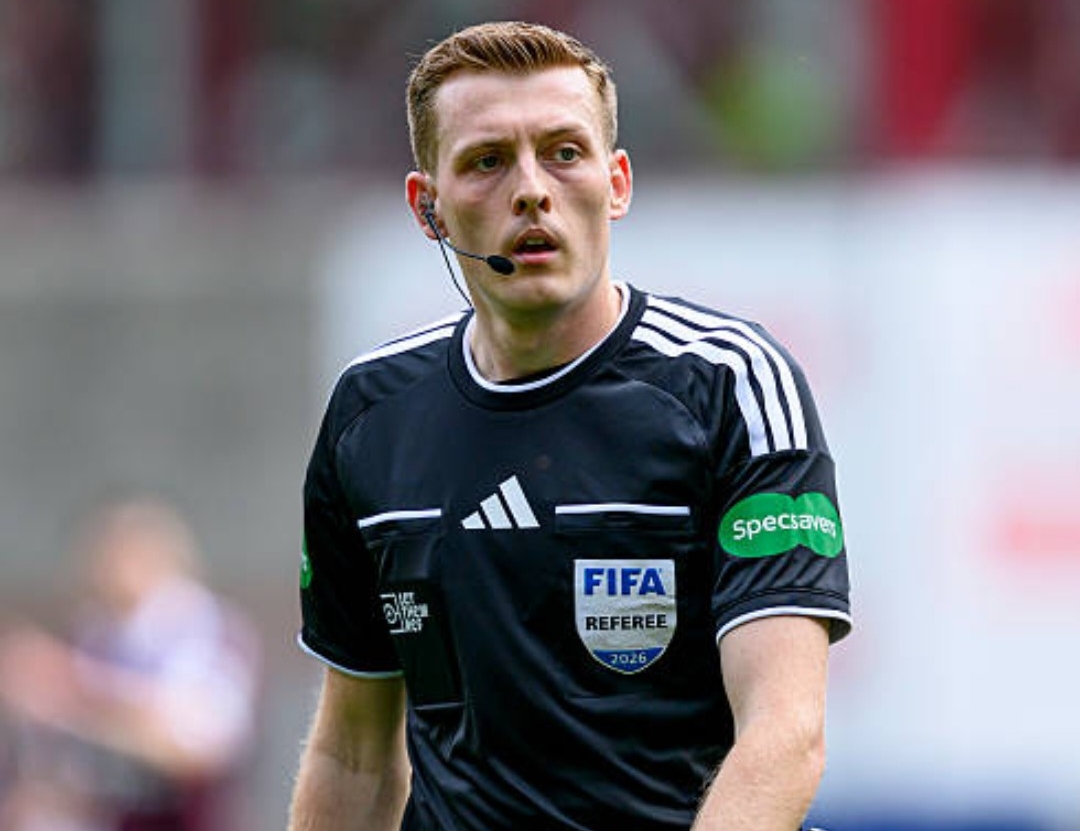
The Scottish FA has finally provided an explanation for one of the most controversial refereeing decisions from Rangers’ Premier Sports Cup semi-final victory over Aberdeen, with Willie Collum confirming that referee Ryan Lee made a mistake when he failed to show James Penrice a yellow card.
The incident has attracted considerable attention because it happened during a crucial stage of the contest, with Aberdeen still fighting to reach the final. And while the decision did not result in a penalty or directly change the scoreline, its potential consequences could have been significant.
Lee was in charge when Rangers faced Aberdeen at Hampden, with the two sides battling for a place in the Premier Sports Cup final. During the first half, Penrice caught Aberdeen midfielder Afeez Aremu with a high challenge, making contact around the side of his body with his studs.
The referee awarded Aberdeen a free-kick but decided against showing Penrice a card. VAR official John Beaton also reviewed the incident but did not recommend any further action.
However, Collum has now explained why the decision was incorrect.
Speaking during his latest refereeing review, the Scottish FA’s head of refereeing made it clear that Penrice’s challenge should have been punished with a yellow card.
Collum’s assessment was that the tackle was reckless rather than merely careless. That distinction matters because a reckless challenge requires a caution, whereas a careless one can be punished with a free-kick alone.
In other words, Lee had an opportunity to book the Rangers defender but failed to do so.
And that is where Aberdeen supporters have reason to feel particularly aggrieved.
Had Penrice received the yellow card, he would have been placed on a booking for the remainder of the match. That could have changed how he approached subsequent challenges, particularly with the pressure of a cup semi-final increasing as the game progressed.
More importantly, another mistimed or reckless challenge could potentially have resulted in a second yellow card and a dismissal. Aberdeen would then have had the opportunity to play against ten men, potentially giving them a significant advantage in their pursuit of a place in the final.
Of course, there is no guarantee that Penrice would have committed another bookable offence, or that Aberdeen would have taken advantage of a numerical superiority. But the possibility makes Lee’s failure to issue the initial caution an important talking point.
A yellow card would have changed Penrice’s disciplinary situation and potentially placed him under greater pressure for the rest of the contest. Instead, he was allowed to continue without that warning hanging over him.
There was also a direct connection between Penrice and the decisive goal.
With the match still goalless, the Rangers defender later produced a low driven effort which took a deflection and fell into the path of Ryan Naderi. The striker made no mistake, finding the net in the 83rd minute to give Rangers a 1-0 victory and send them through to the final.
That sequence inevitably adds another layer to the controversy. The player who should have been booked for his earlier challenge remained on the pitch and was subsequently involved in the move that led to Rangers’ winning goal.
Collum’s explanation does not establish that Penrice should have been sent off, nor does it mean Rangers’ victory was illegitimate. His verdict was specifically that a yellow card should have been issued for a reckless challenge.
Nevertheless, Aberdeen were denied the opportunity to see the correct disciplinary punishment applied at the time. Had that booking been shown, the remainder of the match could have unfolded very differently, especially if Penrice had later picked up another caution.
For supporters questioning Lee’s judgement, the Scottish FA’s admission confirms that the referee got an important decision wrong at Hampden. And with Rangers ultimately progressing to the final through a goal involving Penrice, it is easy to understand why the missed yellow card has become such a major talking point.


 Nafisa