 Nafisa
Rangers may have secured their place in the Premier Sports Cup final with a narrow victory over Aberdeen, but one controversial decision at Hampden has continued to attract attention, with questions being raised over how James Penrice managed to escape a red card.
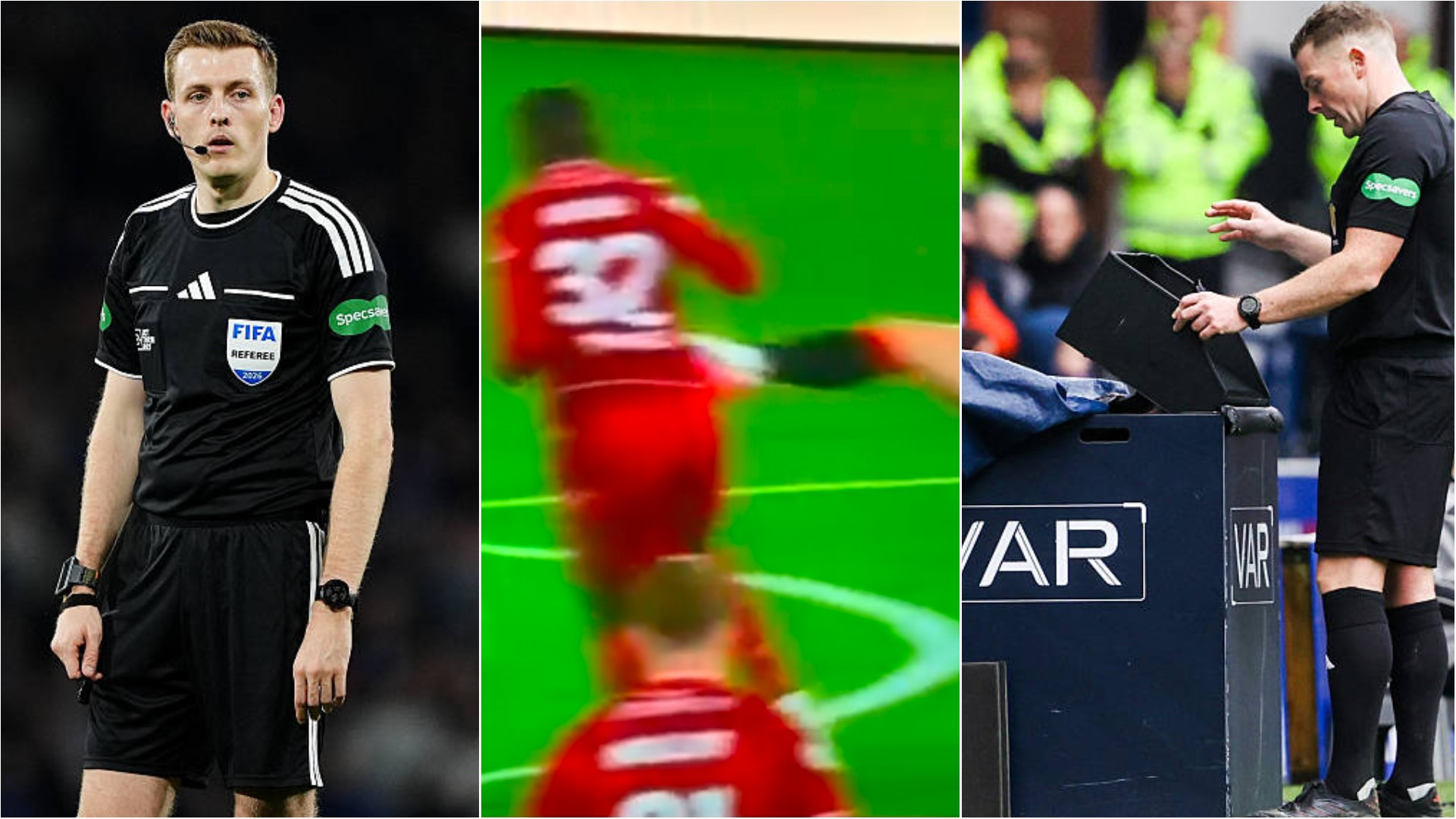
The incident happened during the early stages of Saturday’s semi-final, when the Rangers defender caught Aberdeen midfielder Afeez Aremu with a dangerously high boot. The challenge left supporters questioning the decision not to punish Penrice, particularly given the potential danger involved.
Despite the nature of the challenge, referee Ryan Lee allowed play to continue without showing the Rangers player even a yellow card. VAR also did not intervene, leaving Aberdeen with little more than frustration over an incident that could have significantly changed the complexion of the contest.
But why exactly was Penrice not sent off?
The decision that left Aberdeen furious:
The challenge occurred just five minutes into the match, with Aremu taking Penrice’s dangerously high boot to the ribcage.
It was the sort of incident that immediately raised questions about player safety and whether the Rangers defender had used excessive force.
Under the Laws of the Game, a player can be sent off for serious foul play when a challenge endangers the safety of an opponent or uses excessive force or brutality. The referee does not need to establish that the player intended to injure his opponent.
That distinction is important because a challenge can still warrant a red card even when there is no suggestion that the player deliberately set out to hurt someone.
However, the decision ultimately rests on the officials’ assessment of the challenge, including its force, nature and the danger posed to the opponent.
In Penrice’s case, referee Ryan Lee apparently did not consider the incident serious enough to warrant a dismissal or even a booking.
The absence of VAR intervention meant the original decision stood.
Why VAR did not overturn the decision:
VAR is permitted to review potential red-card incidents, including challenges that could constitute serious foul play.
However, its involvement is subject to the clear-and-obvious-error threshold. It is not intended to re-referee every physical challenge or automatically overturn every decision that attracts controversy.
For VAR to recommend an on-field review, the incident must meet the relevant criteria for intervention. If the officials in the VAR room do not consider the referee’s decision to be a clear and obvious error, the original call remains in place.
That appears to be what happened at Hampden, although there has been no detailed public explanation confirming precisely how the referee and VAR assessed the challenge.
The fact that Penrice escaped without even a yellow card has therefore become a major talking point, especially because the challenge involved contact with Aremu’s upper body.
Keith Hackett delivers brutal verdict
Former PGMOL chief Keith Hackett has offered a particularly strong assessment of the incident, arguing that Penrice should have been sent off.
Speaking exclusively to Ibrox News, Hackett did not hide his frustration with the decision.
“Wow. That’s a nailed-on red card.
“The challenge clearly endangered the safety of his opponent and fulfilled the criteria for Serious Foul Play.
“Look at the landing area into the chest of his opponent.
“Surely elite officials cannot allow that type of challenge to go unpunished – where was VAR?”
Hackett’s comments underline the central argument surrounding the incident: whether the nature of Penrice’s challenge should have been enough to trigger a serious foul play dismissal.
His assessment also raises questions about the role of VAR, particularly when an incident involves a potentially dangerous challenge that the on-field referee has allowed to go unpunished.
Rangers progress as controversy continues
Rangers eventually secured a 1-0 victory over Aberdeen, with Ryan Naderi scoring in the 83rd minute to send his side into the Premier Sports Cup final.
The result was an important one for Rangers, who will now face either Hearts or Hibernian in the final on December 13.
However, the controversy surrounding Penrice’s challenge has ensured that the result has not been the only talking point from Hampden.
Aberdeen’s own match report described Aremu as taking Penrice’s dangerously high boot in the ribcage and highlighted that the Rangers defender somehow escaped a booking.
For Aberdeen, the frustration will be that such an early incident could have resulted in Rangers being reduced to ten men, potentially changing the balance of the semi-final.
There is no official explanation establishing why the referee and VAR reached their decision. But Hackett’s intervention has added further weight to the criticism, with the former refereeing chief insisting that the challenge met the criteria for a straight red card.
Ultimately, Penrice remained on the pitch, Rangers progressed to the final, and the officials’ handling of the incident is now facing serious scrutiny.


 Nafisa