
 Nafisa
Leeds United may have escaped with a point against Brentford on Sunday, with the Whites forced to fight back from behind to claim a 1-1 draw at Elland Road.
Daniel Farke’s side had to show plenty of character after finding themselves second best for large periods of the opening 45 minutes.
Brentford looked the more dangerous team before the break and eventually got the reward their pressure deserved when Kevin Schade’s flick looped over James Trafford to put the visitors ahead.
Leeds responded after the interval, with Farke turning to his substitutes in an attempt to change the game.
The decision eventually paid off.
Lukas Nmecha made an immediate impact after coming off the bench, helping create the opening for Dominic Calvert-Lewin to restore parity and ensure Leeds took something from the contest.
The second half then became a far more open affair, with both teams committing players forward and some heavy challenges flying in.
Leeds had their own claims for a penalty during the period, but according to former PGMOL chief Keith Hackett, it was actually the Whites who may have been fortunate not to concede one themselves.
Jayden Bogle penalty incident sparks controversy
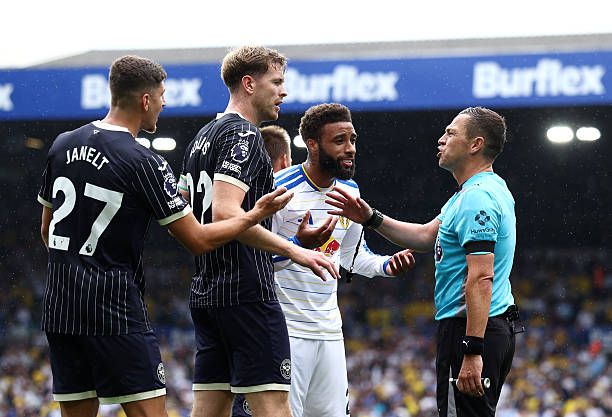
Just after the hour mark, Brentford launched a rapid counter-attack which ended with Schade going down inside the Leeds penalty area.
Jayden Bogle had challenged the Brentford attacker and referee Tony Harrington immediately waved away the appeals for a spot-kick.
VAR subsequently agreed with the referee’s original decision, meaning play continued without a penalty being awarded.
However, Hackett was far less forgiving when he assessed the incident.
The former referee believes Bogle deliberately tripped Schade and that Brentford should have been awarded a penalty.
Speaking exclusively to MOT Leeds News, Hackett said:
“This is a foul. It’s a deliberate trip on an opponent and I am surprised that a penalty kick was not awarded by the referee.
“I do not think you need to do a forensic check on this to see it’s a foul.”
That verdict will certainly concern Leeds supporters.
Had Brentford been handed the opportunity from 12 yards and converted, Farke’s side could have found themselves two goals behind with little time remaining to rescue the match.
Instead, Leeds survived the incident and eventually found their equaliser through Calvert-Lewin.
There was perhaps an element of fortune involved for the Whites, particularly given how strongly Brentford had performed during the opening half.
Farke’s tactical change could be significant
There was also an interesting tactical development during the second half which could prove more significant than the result itself.
Leeds went into the break behind, prompting Farke to make changes in an attempt to turn the game around.
The German eventually moved his team into a 4-2-3-1 formation, and the switch appeared to have an immediate effect.
Leeds won the second half 1-0 while operating in the same system that caused Farke considerable problems last season.
There have already been suggestions that the manager could eventually return to the 4-2-3-1 after relying on different tactical setups, and the Brentford game may have provided the first genuine indication that he is considering bringing it back.
For now, though, Leeds will probably be satisfied with the point.
They were not at their best, particularly before half-time, but they showed enough resilience to recover from Schade’s opener.
And while Hackett’s assessment means there will be questions over how fortunate Leeds were to avoid conceding a second, Farke can also take encouragement from the impact of his substitutes and the way his tactical adjustment changed the contest.
A point may ultimately prove valuable — but Leeds will know they cannot afford to rely on moments of fortune too often.

 Nafisa