 Nafisa
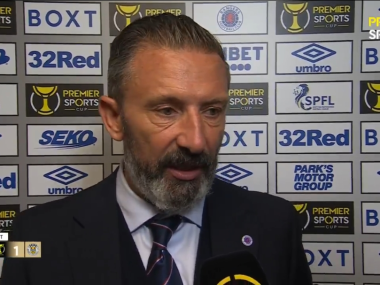
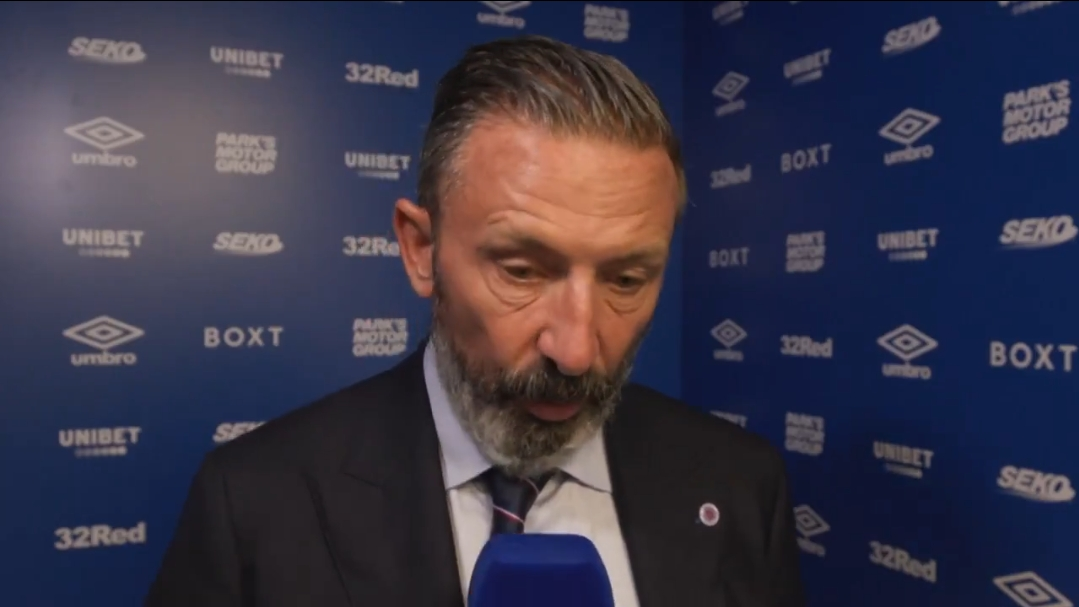
Derek McInnes did not have many answers after another miserable night for Rangers at Ibrox.
The Light Blues entered the second leg knowing they had to overturn a 2-1 deficit from the first meeting with Jagiellonia Bialystok, and for a while it looked as though they were on course to do exactly that.
Lawrence Shankland’s penalty gave Rangers the advantage on the night and levelled the tie on aggregate.
The home side had opportunities to build on that lead, with the atmosphere inside Ibrox beginning to change as supporters sensed a route back into the Europa League.
Instead, Rangers completely unravelled after the interval.
Nik Prelec’s second-half equaliser put Jagiellonia back in front on aggregate, and Rangers were unable to find the response required to force extra time.
The 1-1 draw meant Jagiellonia progressed 3-2 on aggregate, leaving McInnes’ side to drop into the Europa Conference League.
And while the Rangers boss admitted his team had not produced a good enough 90-minute performance, his post-match assessment raised plenty of eyebrows.
McInnes points the finger at Rangers players
Rather than focusing heavily on his own tactical decisions, McInnes placed considerable emphasis on the players’ decision-making and inability to maintain their composure.
The Rangers manager described the build-up to Jagiellonia’s equaliser as “madness”, before insisting that the problem was not a lack of numbers.
According to McInnes, the players simply failed to make the right decisions.
“It is not a lack of bodies,” he said. “It is a lack of intelligence and a lack of doing the right thing.”
Those comments will inevitably leave Rangers supporters questioning exactly who McInnes believes failed to do their jobs properly.
The manager had already changed his tactical system at half-time, bringing Ross McCrorie on for Thelo Aasgaard and altering the shape of his team.
The change appeared to disrupt Rangers rather than improve them, with the hosts losing much of the attacking threat they had shown before the break.
Former Rangers striker Steven Thompson subsequently criticised the decision, describing the change as an incredible one given how well Rangers had performed in the opening 45 minutes.
But McInnes instead focused on what happened after the equaliser.
Rangers ‘lost all of our composure’
Once Prelec found the net, McInnes felt his players mentally collapsed.
The Rangers boss admitted that the goal had a major psychological impact on his team and claimed confidence disappeared almost immediately.
“Once they equalised, it is so difficult because the players lose confidence, the situation becomes a bit desperate and I thought we just lost all of our composure after that.”
That was perhaps the most damning part of McInnes’ assessment.
Rangers were playing at Ibrox, had already recovered from the first-leg defeat and needed only one more goal to take the tie into extra time.
Instead, the team appeared increasingly frantic.
Their passing became sloppy, attacks broke down and the visitors were able to defend their advantage without facing the sustained pressure Rangers needed to produce.
‘Not great to watch’
McInnes was brutally honest about the performance itself.
He acknowledged that Rangers had produced some positive moments but insisted the overall display was nowhere near the required standard.
“In the four games we’ve had, there’s been some good moments, but it’s not been good enough and certainly not a strong enough 90-minute performance.”
He then admitted just how difficult the second half was for supporters to watch.
“It is not great to watch. My team go from some good highs in the first half to being as poor as we were in the second half and you have to say we didn’t do enough.”
That admission will do little to calm the growing frustration around Ibrox.
McInnes has now gone four competitive matches without a victory since taking charge, and Rangers’ European campaign has already taken a significant step backwards.
Even throwing Fernandez forward did not work
As Rangers chased the goal that would have kept their Europa League hopes alive, McInnes attempted to add another attacking option by pushing Emmanuel Fernandez forward.
But even that desperate measure failed to produce the desired response.
“We huffed and puffed and even when we threw [Emmanuel] Fernandez up, we still don’t make the right decisions.”
That sentence perhaps sums up Rangers’ night.
They had opportunities.
They had bodies forward.
They had the home advantage.
But when the decisive moments arrived, Rangers repeatedly chose the wrong option.
And that is something McInnes now needs to fix urgently.
‘Rangers at their best should be winning this’
Despite his criticism of the players, McInnes did not attempt to excuse the result by claiming Jagiellonia were simply too good.
Instead, he acknowledged that Rangers should have progressed.
“We should be winning this game. Jagiellonia are a decent team with some good players and I think they’re well coached, but Rangers at their best should be winning this.”
That statement could prove significant.
McInnes clearly understands that simply blaming the quality of the opposition will not wash with Rangers supporters.
The expectation at Ibrox is to beat teams like Jagiellonia, particularly on home soil.
But the manager’s comments also raise an uncomfortable question.
If Rangers were good enough to win the tie, why did the team look so different after half-time?
McInnes now has no time to dwell
The Rangers boss finished by looking ahead rather than dwelling on the European disappointment.
“We have work to do to get ready for a cup tie against St Mirren on Sunday.”
That is certainly true.
Rangers cannot afford another poor result.
The Europa League exit has already increased the pressure surrounding McInnes, and another setback in the Premier Sports Cup would make an already difficult beginning to his tenure even more uncomfortable.
The manager has admitted the performances have not been good enough.
He has questioned his players’ intelligence, decision-making and composure.
But supporters will also expect McInnes to examine his own decisions — particularly the tactical alteration that appeared to turn a promising first half into a desperately poor second.
Because at Rangers, responsibility does not stop with the players.
And after four competitive games without a win, McInnes knows he needs to find answers — and fast.

 Nafisa