 Nafisa
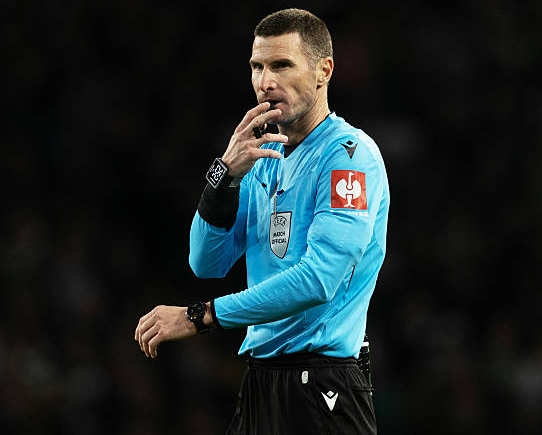
Celtic supporters have been left demanding answers after referee Georgi Kabakov refused to award their side a penalty against Celta Vigo, despite what several pundits considered clear contact on Callum Osmand.
The controversial moment came during Celtic’s Europa League clash at Parkhead, where Martin O’Neill’s men were desperate to get their campaign back on track after losing their opening two matches against Ferencváros and Benfica.
With the pressure already mounting, every major decision carried enormous significance. Celtic needed a result, and when Osmand went down following a challenge from Celta Vigo defender Javi Rueda, the home side immediately appealed for a penalty.
However, Kabakov waved play on.
The decision proved particularly frustrating for Celtic because the incident happened directly in front of the referee, while the forward appeared to be making progress towards goal. Former Celtic players and pundits were quick to question why the official had not awarded a foul.
But if contact was visible, why did Kabakov refuse to give Celtic the decision?
Why Georgi Kabakov refused to award the penalty:
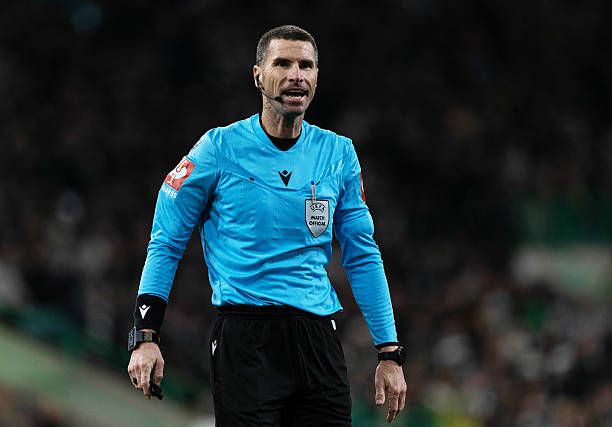
The key detail surrounding the incident is the location of the initial contact.
Reports and pundit analysis suggested that Rueda’s challenge on Osmand began outside the penalty area. That distinction could explain why Kabakov did not point to the spot, although it does not, by itself, explain why he allowed play to continue altogether.
Under the Laws of the Game, a direct-free-kick offence committed outside the penalty area is normally punished with a free-kick rather than a penalty.
In other words, even if Rueda fouled Osmand, Celtic would not automatically be entitled to a penalty simply because the striker was running towards the box or ended up falling inside it.
The referee needed to determine whether an offence had occurred and where the relevant contact took place.
If Kabakov judged that the challenge began outside the area, he could have awarded Celtic a free-kick instead. If he believed there had been no foul, however, allowing play to continue would have followed from that assessment.
The difficulty for Celtic is that the referee did not award either punishment.
In a nutshell, the referee didn’t award the Penalty because the contact wasn’t made in the box, the player rather fell inside the box after feeling the touch which occured on the edge of the 18-yard box.
Stiliyan Petrov and Neil Lennon question the referee
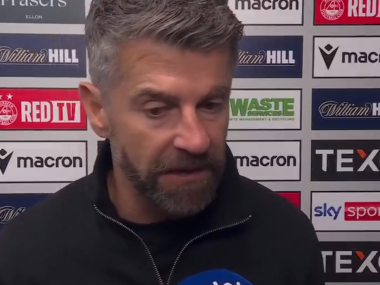
Former Celtic midfielder Stiliyan Petrov was among those who expressed serious concerns about the decision, arguing that Osmand had been denied a significant opportunity.
Speaking on TNT Sports, Petrov said:
“(The foul) is probably outside the box but can they even look at it being a red card? Osmand is going through and I think it’s a really, really poor decision.”
Petrov’s comments are significant because he acknowledged the possibility that the incident occurred outside the penalty area while still questioning the referee’s handling of it.
His argument was not simply that Celtic should have received a penalty. He also raised the possibility that the challenge deserved further punishment because Osmand was progressing towards goal.
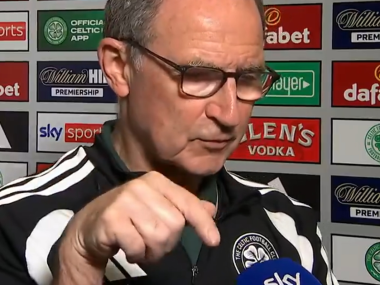
Former Celtic manager Neil Lennon was even more direct in his criticism.
He said:
“That is beyond me that (why it’s not a penalty). It’s either a foul outside the box or a penalty.
“Why does he (Osmand) go down? He doesn’t need to. He is going straight into the box and there is definitely contact, we can see it from up here in the gantry. I don’t know what the referee is seeing. Any touch at all can bring you down sometimes as you lose balance.”
Hearts defender Craig Halkett also questioned whether Rueda had escaped punishment.
He said:
“He (the defender) was obviously trying to put Osmand off but I think there was more than a little bit of contact there.
“You can see the push when Osmand is running through on goal. He has no other reason to go down so I think the defender is really lucky to get away with that.”
The three pundits clearly felt that the contact warranted greater scrutiny. However, their assessments remain opinions rather than proof that Kabakov deliberately ignored an offence.
Did the referee have a clear view of the incident?
The fact that the challenge reportedly happened directly in front of Kabakov has added to the frustration surrounding the decision.
From a supporter’s perspective, seeing an incident clearly positioned in the referee’s line of sight makes it difficult to understand why no foul was awarded.
However, being close to an incident does not automatically mean an official has the same interpretation as everyone watching it. The referee must judge the nature of the contact, whether it unfairly impeded the attacker and where the offence occurred.
A defender can make contact with an opponent without necessarily committing a foul. Conversely, a push or other illegal challenge can constitute an offence even if it does not appear particularly forceful.
That is why the crucial question is not simply whether Rueda touched Osmand, but whether the contact amounted to an offence under the Laws of the Game.
The available reports do not provide an official explanation from Kabakov, meaning the precise reason for his decision remains unclear.
What is clear is that the decision left Celtic feeling aggrieved, while the pundits’ reaction demonstrated how strongly they disagreed with the referee’s assessment.
Another painful night for Celtic
The controversy became part of another damaging European night for O’Neill’s side.
Celtic eventually took the lead through Mika Baur early in the second half, but Celta Vigo equalised through Javi Rodriguez before the same player scored again just minutes later to complete a 2-1 comeback victory.
The result left Celtic without a point after their opening three Europa League matches, placing their hopes of reaching the knockout stages under serious pressure.
For O’Neill, the disappointment will extend beyond the disputed penalty appeal. Celtic had opportunities to strengthen their lead against Celta Vigo but ultimately failed to protect their advantage when the match turned against them.
Nevertheless, the Osmand incident has left an important question unanswered: if Kabakov believed there was no penalty because the contact began outside the box, why did he not award a free-kick?
Without an official explanation, his precise reasoning remains unknown.
Celtic’s strongest argument is therefore not simply that they were denied a penalty, but that they may have been denied a foul altogether despite the contact identified by several pundits.


 Nafisa