 Nafisa
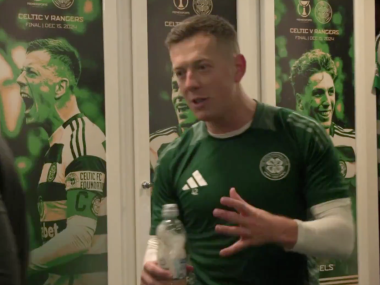
Derek McInnes has reignited his bitter war of words over Celtic’s controversial Scottish Premiership title triumph, returning to the grievances that cost him a Scottish FA suspension after Hearts were denied what he still believes should have been a historic championship.
The Rangers manager has never hidden his anger over the decisions that shaped last season’s title race, particularly the late penalty awarded to Celtic against Motherwell that transformed the championship picture just days before the final showdown at Celtic Park.
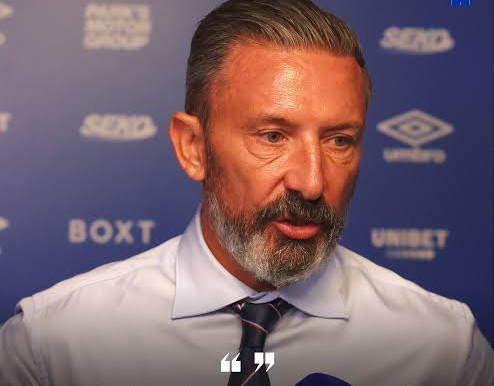
Now, following Rangers’ dramatic 2-2 draw with Hearts at Tynecastle, McInnes has returned to the subject, insisting that his former club suffered a “real injustice” and suggesting that a handful of contentious decisions prevented him from winning the league outside the traditional dominance of Celtic and Rangers.
His comments have reopened one of Scottish football’s most contentious debates, bringing back memories of the furious reaction to Celtic’s late victory at Fir Park, the subsequent disciplinary action against McInnes and the conflicting assessments of the decisive handball decision.
McInnes’ growing feud with Celtic over last season’s title
McInnes’ frustration with Celtic is rooted in the extraordinary circumstances surrounding Hearts’ title challenge last season.
Under his leadership, Hearts emerged as serious contenders for the Premiership crown, threatening to end decades of dominance by the Glasgow giants. The Edinburgh side collected 80 points and entered the closing stages of the campaign believing they had a genuine opportunity to make history.
However, the final weeks were overshadowed by contentious officiating decisions that McInnes believed worked against his team.
The former Hearts manager became increasingly vocal about those incidents, arguing that his players deserved better after an outstanding campaign. His anger reached its peak following Celtic’s dramatic late victory over Motherwell, when a penalty decision changed the complexion of the championship race.
For McInnes, the issue was never simply about losing to Celtic. It was about the belief that Hearts had done enough to win the title, only for controversial decisions to alter the circumstances heading into the decisive final fixture.
That grievance has followed him into his new role at Rangers, and his latest comments demonstrate that he has not changed his position.
The Celtic penalty that sparked a Scottish football storm
The flashpoint came on May 13, 2026, when Celtic travelled to Motherwell for a crucial Premiership encounter.
Hearts had beaten Falkirk 3-0 and appeared poised to take a major step towards the championship. Celtic, meanwhile, were drawing 2-2 at Fir Park deep into stoppage time.
Then came the incident that changed everything.
During a late attacking move, Motherwell’s Sam Nicholson challenged for a high ball alongside Celtic defender Auston Trusty. VAR official Andrew Dallas advised referee John Beaton to review a possible handball, and Beaton subsequently awarded a penalty.
Kelechi Iheanacho converted the spot-kick to secure a dramatic 3-2 Celtic victory.
The result reduced Hearts’ advantage to a single point before the final-day meeting between the sides at Celtic Park. Instead of entering that game with a potentially decisive cushion, McInnes’ team faced a winner-takes-all showdown against the defending champions.
McInnes was furious.
Speaking after the Motherwell match, he said: “I think it’s disgusting. I don’t think it’s a penalty kick.”
He also complained that Hearts were “up against everybody” and argued that Celtic had been fortunate to receive the decision.
The controversy was intensified by questions over whether the ball had struck Nicholson’s head or his raised hand. Several former players and refereeing voices publicly questioned the award, while Celtic manager Martin O’Neill defended the decision.
The incident remains central to McInnes’ belief that Hearts were denied a fair opportunity to win the championship.
What the Scottish FA and its review process said
The controversy did not end with the final whistle.
McInnes was charged under Scottish FA disciplinary rule 72, which concerns criticism of match officials that indicates bias or incompetence, or remarks that impinge on their character.
In July, he received a four-match touchline ban, with three matches initially scheduled to take effect immediately and one suspended. Rangers appealed, arguing that McInnes had criticised a specific decision rather than attacking the competence or integrity of officials.
Following the appeal, the immediate portion of the suspension was reduced to two matches, while the overall four-match sanction remained in place, with the remaining two matches suspended subject to the relevant disciplinary conditions.
The official review picture was also more complicated than a simple declaration that the decision was unquestionably correct.
Rangers said the Scottish FA’s independent Key Match Incident Panel had concluded that the referee’s original decision was correct and that VAR should not have intervened. A separate account of the controversy reported that the panel’s majority opposed the penalty award, while Scotland’s head of refereeing, Willie Collum, subsequently backed the decision.
Those distinctions matter. The penalty was awarded after a VAR review, but the subsequent assessments did not amount to a universally agreed verdict that the incident was clear handball.
The disciplinary case against McInnes concerned his criticism of match officials. It did not establish that Celtic had cheated or that officials had deliberately favoured the club.
Nevertheless, the suspension intensified the dispute, leaving McInnes facing punishment for comments that he and Rangers maintained were legitimate criticism of a match-defining decision.
McInnes returns to the ‘real injustice’ claim
The controversy has now resurfaced following Rangers’ 2-2 draw against Hearts at Tynecastle.
Ahead of his return to his former club, McInnes was asked about the possibility of receiving a hostile reception from supporters who had watched him leave after their heartbreaking title challenge.
He acknowledged that some fans might believe he deserved criticism, but insisted that nothing would change how he remembered his time at Hearts.
He said:
“I totally get if, you know, the treatment I get tomorrow is what it is and you could say maybe I deserve it but nothing will change how I felt about how my time was at Hearts. I loved what we had there. We had a brilliant season. My players were outstanding and we showed what could be done and I know and I think there was a real injustice that we felt that grievance towards the end of the season that we should have won a title. I wanted to be a manager that won a title outwith our own firm and, you know, but for so a few contentious decisions going against us I think we would have won.”
The statement was a clear indication that McInnes has not abandoned his belief that Hearts should have been crowned champions.
He did not call Celtic “cheats” or describe the club as a “failure” in those remarks. Instead, his criticism centred on the contentious decisions he believes cost Hearts the opportunity to win the league.
Hearts’ title heartbreak still fuels the debate
McInnes’ argument remains controversial because Celtic ultimately won the championship on the pitch.
Hearts went into the final-day meeting at Celtic Park knowing that a positive result would secure the title, but Celtic won 3-1, with Daizen Maeda and Callum Osmand helping the hosts complete their comeback after Lawrence Shankland had given Hearts the lead.
That result secured Celtic the championship, while Hearts were left to reflect on a campaign that had taken them closer to ending the Old Firm’s dominance than they had managed for generations.
McInnes can point to the controversial penalty as a pivotal moment, but the final-day defeat also formed part of the outcome. Whether the title would have unfolded differently without the Fir Park incident remains a matter of debate.
What is beyond doubt is that the controversy has continued to follow McInnes, from his disciplinary case to his return to Tynecastle as Rangers manager.
His latest comments have once again placed Celtic’s title triumph under scrutiny, and his insistence that Hearts suffered a “real injustice” suggests the argument is far from over.
For Celtic supporters, the championship remains theirs. For McInnes, however, the belief that Hearts should have won it remains an unresolved grievance—and one that continues to fuel one of Scottish football’s most heated debates.


 Nafisa