 Nafisa
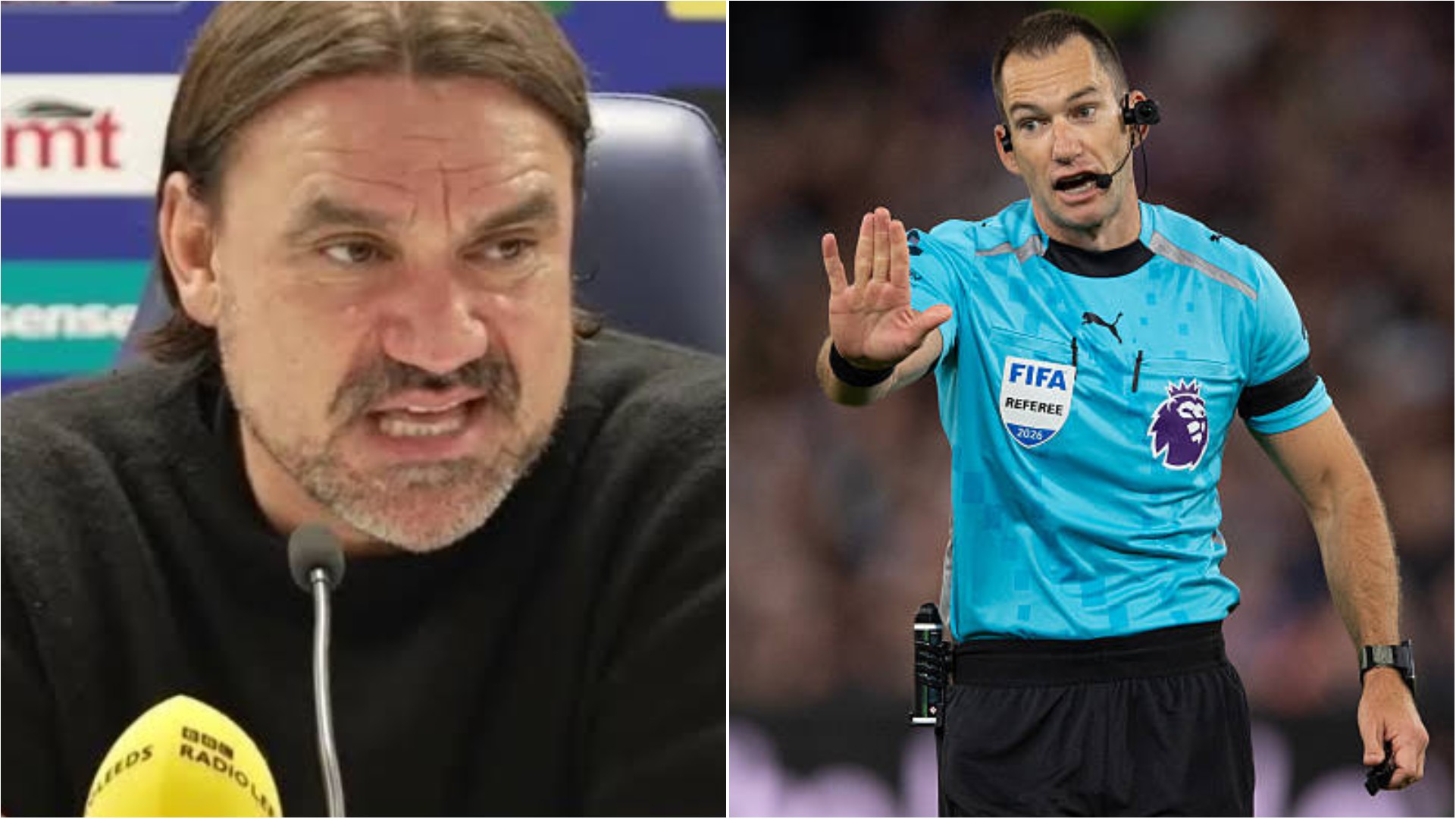
Daniel Farke was left raging after Jarred Gillett’s controversial penalty decision helped Chelsea launch their extraordinary comeback against Leeds United at Stamford Bridge.
Leeds looked to be heading towards a famous Carabao Cup victory after establishing a two-goal advantage in the opening stages of the second half.
But everything changed in a matter of minutes.
The visitors had already stunned Chelsea by taking a 2-0 lead, with Tarik Muharemovic opening the scoring before Brenden Aaronson doubled the advantage shortly after half-time.
Chelsea appeared to be heading towards a shock exit before Gillett intervened with a decision that immediately became one of the biggest talking points of the night.
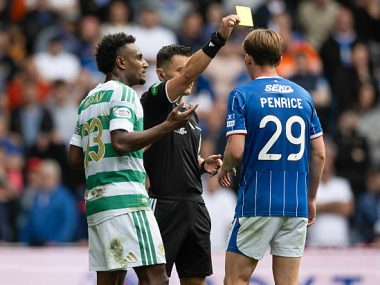
The Australian referee pointed to the spot after Dan James was judged to have caught Pep Chavarria inside the Leeds penalty area.
Cole Palmer made no mistake from 12 yards, and just two minutes later he scored again to bring Chelsea level.
From there, the momentum completely swung towards the hosts, who eventually turned the match into a 6-3 victory.
Why did Gillett give the penalty?
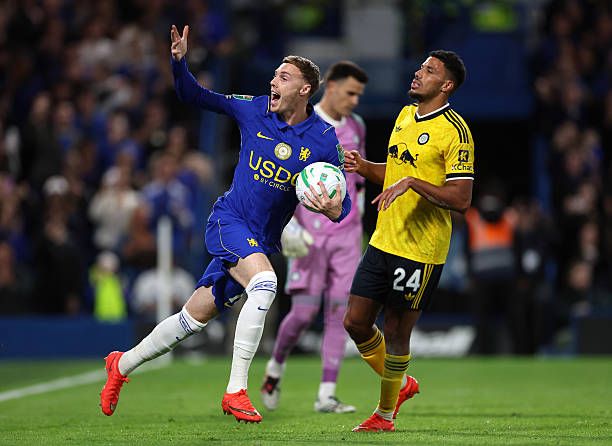
The biggest question surrounding the incident was not whether there was any contact — there clearly was — but whether the contact was serious enough to justify a penalty.
Sky Sports’ description of the incident was that James was penalised for catching Chavarria’s standing leg.
Chelsea’s official match report similarly states that James fouled Chavarria as the Chelsea wing-back attempted to deliver the ball.
That is the key to understanding Gillett’s decision.
The referee appears to have judged the contact as a genuine foul rather than simply deciding that Chavarria had gone down too easily.
And while the contact was soft, the fact that James made contact with the Chelsea player’s foot gave Gillett enough justification, in his view, to award the spot-kick.
That distinction is crucial.
A challenge does not suddenly become legal simply because the contact is minimal. If the referee believes an opponent has been caught illegally inside the penalty area, he is entitled to award a penalty.
The argument is whether the threshold should have been high enough for that particular incident.
Farke’s furious reaction
For Farke, that was precisely the problem.
The Leeds boss was furious that a relatively minor piece of contact had been allowed to change the entire complexion of the contest.
His frustration was heightened by the fact that Chelsea had barely threatened before the decision.
As reported by Sky Sports, Farke argued:
«”We played with confidence, there was not even a chance for them, then the referee decided to give a penalty.”»
That was essentially the heart of the Leeds manager’s complaint.
Farke was not simply arguing that James made no contact with Chavarria.
His objection was that the level of contact was nowhere near enough to warrant such a significant decision.
And given what happened afterwards, it is easy to understand why Leeds felt aggrieved.
Palmer converted the penalty.
Two minutes later, he scored again.
Then Pedro Neto put Chelsea ahead before Danny Welbeck added a fourth.
Chelsea had gone from staring at a humiliating cup exit to leading 4-2 in an astonishingly short period of time.
The VAR factor makes the decision even more controversial
There was another important factor surrounding Gillett’s decision.
There was no VAR available for the match.
Leeds’ own official announcement before the fixture confirmed that VAR was not being used at this stage of the competition.
That meant once Gillett pointed towards the spot, there was no opportunity for another official to review the incident and potentially tell him that the contact was too minimal for a penalty.
There was no lengthy pitchside review.
No replay-based intervention.
No second opinion.
Gillett’s decision was effectively final.
That makes the controversy even more understandable from Leeds’ perspective because the entire game-changing moment rested on the referee’s interpretation of a very small piece of contact.
Was it actually an “undeserved” penalty?
That is where the debate becomes far more interesting.
Calling it a completely incorrect decision would be difficult to defend.
James did make contact with Chavarria’s standing leg, and both Sky Sports and Chelsea’s official report describe the incident as a foul.
But calling it a soft penalty is much easier to justify.
The contact was hardly a conventional tackle.
There was no reckless lunge.
There was no obvious attempt to bring Chavarria down.
Instead, James’ foot made contact with the Chelsea player’s standing leg as Chavarria attempted to play the ball.
That leaves the central question: should every foul inside the penalty area automatically become a penalty when the contact is this slight?
That is the issue Farke was clearly wrestling with.
And considering Chelsea went from 2-0 down to 6-3 winners, the decision had consequences far beyond one isolated moment.
For Leeds, it was the moment the game began slipping away.
For Chelsea, it was the lifeline they desperately needed.
And for Gillett, the decision ultimately came down to one judgement call: the contact was enough to cross his threshold for a foul inside the box.
Whether supporters agree with that threshold is another matter entirely.

 Nafisa