 Nafisa
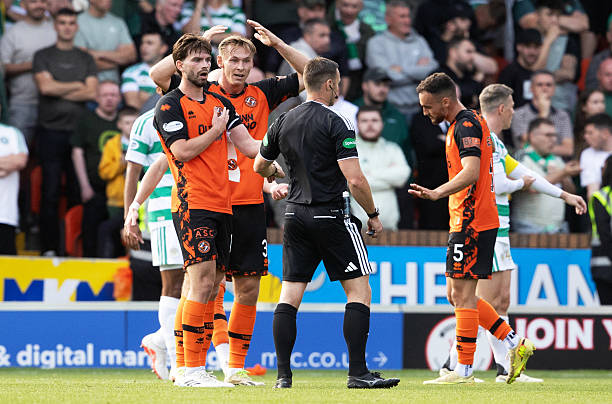
Celtic’s controversial goal against Dundee United has continued to fuel debate across Scottish football, with Rangers supporters among those questioning why the strike was allowed to stand despite the ball clearly making contact with Kasper Høgh’s arm in the build-up.
The incident came during Celtic’s 4-0 Premier Sports Cup victory at Tannadice, a result that sent Martin O’Neill’s side through to the next round but was accompanied by another major refereeing talking point.
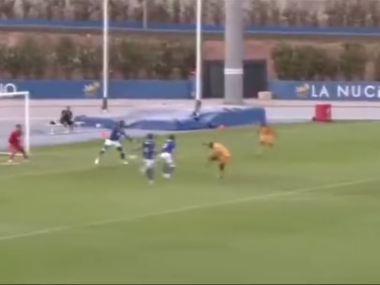
Celtic were already in control when Høgh became involved in the attacking move that eventually ended with Camilo Durán finding the net.
However, replays showed the ball striking Høgh’s arm, immediately prompting questions about whether the goal should have been ruled out.
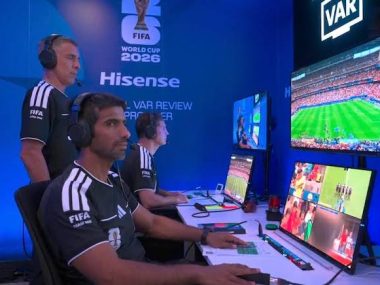
VAR checked the incident, but referee Steve McLean’s original decision was allowed to stand.
That has left some Rangers supporters particularly furious, with the argument being that once the ball hit the Celtic attacker’s hand, the goal should automatically have been cancelled.
But that is not actually how the current laws of the game work.
Steve McLean awarded the goal before VAR checked it
The important point to establish first is that Steve McLean was the on-field referee who awarded the goal.
VAR did not award the goal.
McLean made the original decision to allow the strike, after which the VAR team reviewed the incident to determine whether there was a clear and obvious error.
After reviewing the footage, VAR did not recommend an intervention and the on-field decision remained intact.
That means the controversial goal was not simply waved through without scrutiny.
The incident was checked.
The handball was considered.
And the decision was ultimately allowed to stand because the contact did not constitute a punishable handball under the circumstances.
That distinction has become increasingly important as the debate has grown online.
But the ball DID hit Høgh’s hand
This is where the controversy becomes slightly unusual.
There is no real argument anymore over whether the ball made contact with Høgh’s arm.
Scottish FA Head of Referees Willie Collum subsequently confirmed that it did.
“The ball clearly strikes the hand of the Celtic attacker,” Collum explained, while making clear that the contact was not considered a punishable offence.
So supporters who watched the replay and said, “The ball hit his hand”, were not imagining things.
It did.
The disagreement is over what the law says should happen after an accidental handball.
And that is where the explanation behind McLean’s decision becomes crucial.
Why didn’t Steve McLean cancel the Celtic goal?
Under the current IFAB Laws of the Game, an accidental handball by an attacking player does not automatically make a subsequent goal illegal.
The identity of the player who handles the ball and the identity of the player who scores are crucial.
If an attacking player accidentally handles the ball and a teammate subsequently scores, the goal can stand.
However, if the player who accidentally handles the ball is also the player who immediately scores, the goal must be disallowed.
That is the key distinction in the Tannadice incident.
Høgh was not the player who ultimately scored.
Another Celtic attacker, Durán, finished the move.
Therefore, the accidental contact with Høgh’s arm did not automatically turn the goal into an offence.
In simple terms, the law does not say that every accidental handball anywhere in an attacking move must result in the goal being chalked off.
It specifically treats the situation differently depending on who ultimately puts the ball into the net.
The crucial rule behind the decision
The reasoning can be broken down very simply.
Høgh accidentally handles the ball → the ball continues to a Celtic teammate → Durán scores → the handball is not punishable under the relevant provision.
Had Høgh handled the ball and then immediately scored himself, the outcome would have been completely different.
That is why McLean could award the goal despite the contact being visible on replay.
The referee was not saying that the ball had somehow missed Høgh’s arm.
The decision was based on whether that contact constituted an offence under Law 12.
And according to the interpretation provided by the Scottish FA, it did not.
Why was the handball rule changed?
The rule exists partly because football’s lawmakers wanted to avoid goals being disallowed for tiny, accidental touches that had no meaningful impact on the scoring action.
The introduction of VAR created a situation where extremely minor handball contacts could suddenly become the focus of lengthy reviews.
Goals could be ruled out because the ball had brushed an attacking player’s arm several seconds before another player eventually finished the move.
IFAB therefore clarified the approach to accidental attacking handballs.
The focus is now much more specifically on whether the player who handled the ball is the player who immediately scores.
If it is a teammate who finishes the move, an accidental touch by the first player does not automatically constitute an offence.
That is precisely what happened at Tannadice.
Rangers fans unlikely to be satisfied
None of that is likely to stop the arguments from supporters who believe Celtic benefited from another controversial refereeing decision.
The fact that the ball visibly struck Høgh’s arm makes the incident particularly easy to frame as a mistake when viewed without the wider context of the law.
But the crucial detail is that contact with the hand and a punishable handball are not necessarily the same thing.
That distinction is exactly why the goal survived the VAR check.
The Scottish FA has also rejected comparisons with the controversial Falkirk handball incident from earlier in the season, insisting the circumstances were different and should not be treated as identical.
Celtic ultimately went on to win 4-0, despite Dundee United hitting the woodwork five times, and the result means O’Neill’s team can now turn their attention towards their European commitments.
But the Tannadice controversy will undoubtedly continue to generate noise.
For Rangers supporters demanding to know why Steve McLean did not cancel the goal, the answer is ultimately found in the law rather than any suggestion that the referee simply ignored the handball.
McLean awarded the goal, VAR checked it, and the Scottish FA later confirmed that although the ball did hit Høgh’s hand, the accidental contact was not punishable because Høgh was not the player who scored.
That is why Celtic’s controversial goal was allowed to stand.

 Nafisa