 Nafisa
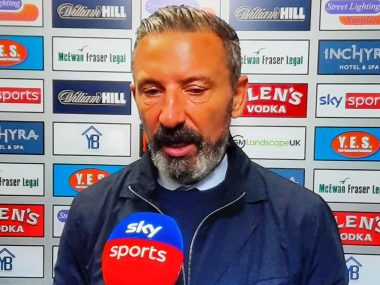
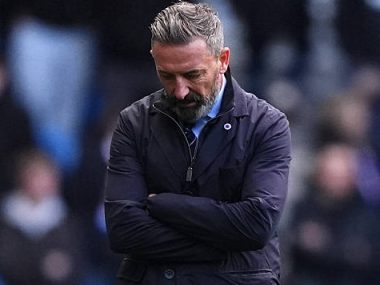
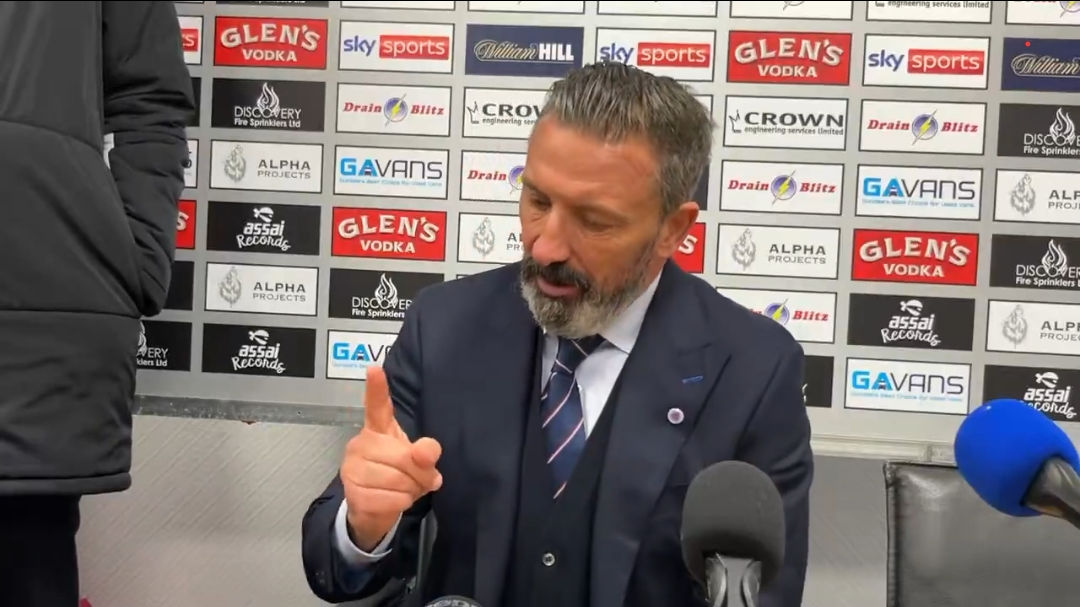
Derek McInnes has been left facing a fresh wave of criticism after Rangers surrendered their lead in a frustrating 2-2 draw against Dundee, but the Ibrox boss has made it clear that his side had shown enough quality to win the game before one costly mistake changed everything.
The Light Blues arrived at Dens Park looking to extend their impressive winning run and seize the opportunity to climb to the top of the Scottish Premiership.
Instead, they left with only a point after a dramatic encounter that saw them recover from an early setback, produce two outstanding goals and then allow their hosts back into the contest.
For sections of the Rangers support, the result was another reason to question McInnes, with angry reactions flooding social media after his post-match assessment. Some branded him a “failure” and a “nearly man”, while others questioned his tactical decisions and the substitutions that followed Rangers’ spell of dominance.
But the manager’s explanation was not simply an attempt to excuse another disappointing result. McInnes pointed to a specific period when Rangers had Dundee pinned back, argued that his team should have made that dominance count and identified an individual error as the moment that shifted the momentum.
His message was clear: Rangers had put themselves in a position to win, but they failed to finish the job.
Speaking after the match, McInnes highlighted the extraordinary 20–25-minute spell after the interval, during which his team increased the tempo, won more second balls and began to cause Dundee serious problems.
“The performance for 20-25 minutes culminated in Nico’s goal. It should be a winning goal because it was such a high-quality goal.
“The disappointment is that we had the game there, we were dominant. We had the game by the scruff of the neck.
“Dundee were struggling to get out of their own half. We were in such a good place. It was almost like a balloon popping when we made the mistake, which can happen.”
Those comments came after Nico Raskin had produced one of the standout moments of the evening, unleashing a stunning long-range effort that put Rangers 2-1 ahead and appeared to have swung the contest firmly in their favour.
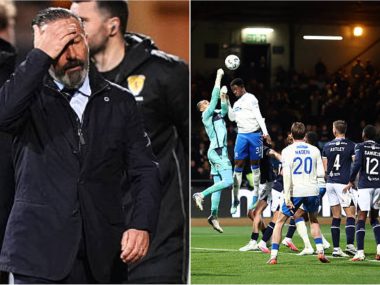
Yet the celebrations proved short-lived. Rangers captain Dan Neil was caught in possession, allowing Callum Jones to capitalise and restore parity for Dundee. What had looked like a potential winning performance suddenly became another frustrating evening for McInnes and his players.
The Rangers boss refused to overlook the significance of that mistake, although he was careful not to publicly turn his criticism into a personal attack on the player involved.
“The second goal is a mistake,” he sighed. “Listen, I’m not going to criticise any of my players for it, but it is a mistake. It kills your momentum, first of all, because football isn’t just a physical game, but mentally. But it also gives Dundee something to hang on to. All of a sudden they are thinking, ‘we might just get something here.’
For McInnes, the problem was not simply that Dundee scored again. The equaliser interrupted Rangers’ momentum at precisely the moment when the visitors appeared to have control, giving the home side renewed belief and making it difficult for the Gers to reproduce their earlier intensity.
That is why the manager also questioned his side’s failure to make more of their attacking opportunities. Despite scoring twice, Rangers had enough possession and promising moments in the opposition penalty area to suggest they should have found another goal.
“We never really got back to that same level. Although we did have enough balls in their box to score and we should be scoring.
“With some of the stats and some of the touches we had, we should be scoring more than two goals tonight. So a combination of that and us also coming away from home, we shouldn’t need to score three goals to win a game of football.
“I think Dundee will be a good team this season. I think they’ll cause teams problems. But the disappointment is clear, because we came here to win and we haven’t done that.”
His assessment followed an uneven first half in which Dundee’s pressing caused Rangers significant problems. McInnes admitted his team had not moved the ball quickly enough, while Minsu Kim needed to operate closer to Naderi and the wide players had to be brought into the game earlier.
The second half, however, offered a glimpse of what the manager believes his team can produce when the tempo and intensity improve. Badredine Bouanani’s equaliser before the interval had already given Rangers a route back into the contest, and both Bouanani and Gassama caused Dundee problems after the break.
McInnes was particularly complimentary about their contribution, insisting that Rangers’ improved attacking play had left the hosts struggling to get out of their own half for a significant period.
That will not necessarily silence the supporters who believe the overall performance remains below the standards expected at Ibrox. Rangers did fail to hold their lead, and McInnes must still find a way to ensure that individual mistakes and missed opportunities do not repeatedly undermine promising performances.
But the manager’s post-match comments also exposed the central frustration of the evening: Rangers had done enough during their strongest spell to put themselves in control, only to throw away the advantage.
The draw ended their seven-game winning run and denied them the chance to move above Celtic, leaving McInnes with plenty to address before the next fixture.
For angry supporters, the result has reopened questions about the manager’s methods and his team’s consistency. For McInnes, the immediate challenge is to turn the positive elements of that dominant spell into a complete performance that lasts long enough to secure three points.
His message after Dundee was not that Rangers had done everything right. It was that they had reached a position from which they should have won — and that a costly mistake, combined with a failure to take their chances, ultimately proved decisive.

 Nafisa