 Nafisa
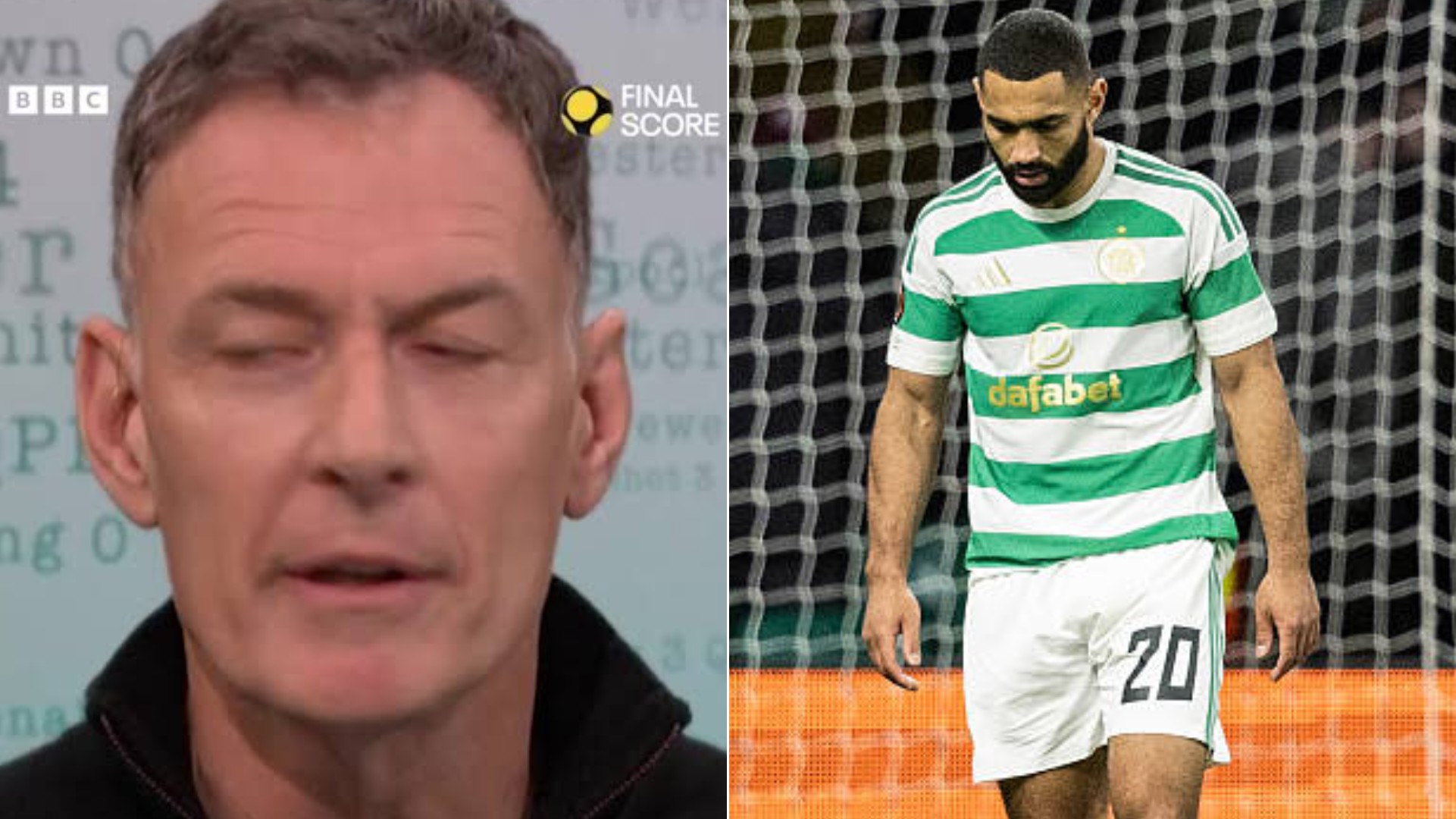
Chris Sutton has delivered a furious response to Cameron Carter-Vickers’ post-match comments after Celtic’s latest Old Firm defeat, with the former Hoops striker suggesting the defender’s words could point towards a growing disconnect between the players and Martin O’Neill.
Celtic’s 1-0 defeat to Rangers at Parkhead was already damaging enough.
It was their second loss to their city rivals in the space of seven days, following the 3-0 League Cup defeat at Ibrox, while a 3-1 Europa League defeat to Ferencvaros had been sandwiched between the two derbies.
Three consecutive defeats have now left O’Neill facing questions over his position.
And after Sunday’s latest setback, the Celtic manager admitted he would take time to reflect on his future.
But it was not simply O’Neill’s comments that caught Sutton’s attention.
The former Celtic striker was particularly struck by what Carter-Vickers had to say immediately after the Rangers defeat.
Carter-Vickers raises eyebrows
Carter-Vickers delivered an unusually frank assessment of Celtic’s problems following the 1-0 defeat.
The American defender suggested that his side lacked a clear identity and described their play as being “too random.”
He also called for greater “consistency of messaging, consistency of ideas, consistency of effort” as Celtic attempt to recover from their disastrous run.
On the surface, those comments could simply be interpreted as a senior player demanding improvement from his own team.
Sutton, however, saw something much more significant in them.
Speaking on BBC Radio 5 Live’s Monday Night Club, the former Celtic striker argued that Carter-Vickers’ words amounted to criticism of the manager and coaching staff.
And Sutton was clearly unimpressed.
“I thought that was disgraceful, what he said.”
That was Sutton’s blunt assessment.
He questioned why Carter-Vickers had chosen to publicly highlight issues surrounding messaging, ideas and consistency rather than placing greater responsibility on the players themselves.
Sutton questions what Carter-Vickers meant
Sutton went even further when discussing the implications of the defender’s comments.
“That is a criticism of the manager. Why did he say that? I don’t get it. It’s about players taking responsibility.”
The former Celtic forward then compared the situation with his own playing days.
“Why is it always down to the manager and coaching staff to tell players exactly? It used to happen when I played, we’d make a decision on the pitch.”
For Sutton, the issue was not simply whether Carter-Vickers had made a valid observation about Celtic’s performances.
It was the decision to make those observations publicly at a time when O’Neill was already under intense pressure.
“I don’t know why the onus is always on the manager. These aren’t 12-year-olds.
“There’s a lot of experience in the team.”
That experience, Sutton suggested, should mean Celtic’s senior players accepting a greater share of responsibility for what has gone wrong.
Instead, he believed Carter-Vickers’ remarks risked creating the impression that the players were waiting for clearer instructions from the manager and his staff.
Sutton admits he is concerned for O’Neill
The former Celtic striker also admitted that he was personally concerned about O’Neill following the manager’s latest comments on his future.
Sutton played under O’Neill during his first spell in charge at Celtic and has therefore watched his managerial career closely.
“I’m just concerned about him.
“He had an operation not so long back. He hasn’t looked particularly well.”
Sutton then pointed towards the pressure O’Neill has experienced since returning to Celtic.
“The stress he has been under – you think about what he did last season, going back once, then going back again, getting Celtic over the line, all that drama.”
O’Neill returned to Celtic last October and subsequently helped guide the club to the league title before returning to the role again in January.
Sutton believes that successful period may have been the natural point at which O’Neill could have walked away.
“Getting the job in the summer, I didn’t necessarily want him to take it, because that was like a perfect finish.”
But O’Neill did continue.
And now, following three consecutive defeats, his position has suddenly become uncertain again.
“He’s clearly thinking about pulling the plug”
O’Neill himself raised the possibility of leaving after the Rangers defeat.
The Celtic boss acknowledged that supporters were entitled to question him and said he would reflect on whether he could still help the team.
Sutton admitted that seeing his former manager in that position was difficult.
“I hated seeing him doing the press conference [post-match on Sunday]. He looks tired. He offered that comment [on considering his future]. That doesn’t bode well.”
Sutton also acknowledged the criticism O’Neill has received because of his age.
“A lot of the age stuff has been thrown at him, and I wonder if it’s all a bit too much.”
The former striker then made a striking connection between O’Neill’s uncertainty and Carter-Vickers’ comments.
“He’s clearly thinking about pulling the plug on it, which many of the players, based on Carter-Vickers’ comments, may want.”
That is a serious interpretation of the defender’s words, however, and Carter-Vickers himself did not explicitly say that he wanted O’Neill to leave.
His comments were focused on Celtic’s lack of consistency and identity rather than directly calling for a change of manager.
Nevertheless, Sutton believes they reveal something important about the relationship between the dressing room and coaching staff.
Celtic now face a difficult decision
The immediate issue for Celtic is no longer simply the result of one Old Firm derby.
The club now has to respond to a run of three successive defeats and determine how best to restore confidence and consistency.
O’Neill has said he will reflect on his position and speak with the board.
At the same time, his players are being asked to explain why performances have deteriorated so dramatically.
Carter-Vickers has provided one explanation: Celtic need greater consistency in their messaging, ideas and effort.
Sutton has provided another perspective: experienced players must accept responsibility rather than placing the entire burden on the manager.
And somewhere between those two positions lies the central problem Celtic now have to solve.
The defeat to Rangers has not only damaged their lead at the top of the Premiership.
It has raised questions about O’Neill’s future, the team’s identity and the relationship between the manager and his players.
For Sutton, that combination is what makes the current situation at Celtic particularly concerning.


 Nafisa