The dust had barely settled at Hampden before the temperature started rising again, and this time it wasn’t coming from the pitch.
St Mirren had pushed Celtic to the edge. For long spells, they looked like the side with the sharper ideas, the greater urgency, and the belief that something special was there for the taking. From two goals down, they clawed their way back into the game and dragged it into a place Celtic clearly didn’t want to be.
And then, just as quickly, it all slipped away.
Extra time told a completely different story. Fresh legs came on, the tempo shifted, and Celtic found a gear that St Mirren simply could not match. What had been a contest suddenly became a procession. The final scoreline did not reflect the fight that came before it, and that’s exactly where the frustration began to boil over.
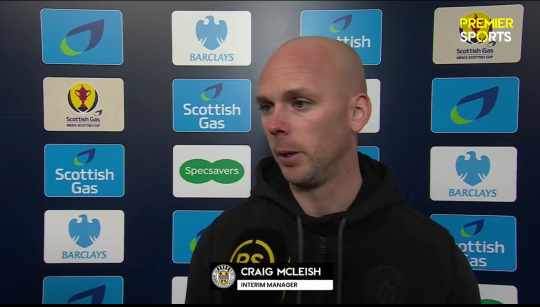
After the match, the St Mirren boss did not hide how he felt about it.
From his perspective, this was not just about tactics or moments. It was about resources. It was about what happens when one team can reach into the dugout and change the game with proven quality, while the other is left hoping the same group can somehow keep going beyond their limits.
He made it clear that, in his eyes, Celtic’s victory owed as much to their depth as anything else. When the game stretched, when fatigue kicked in, when decisions had to be made, Celtic had options that St Mirren simply do not have at their disposal.
That is where the frustration lies.
For St Mirren, getting to that stage required everything. Energy, discipline, belief. They executed their plan, disrupted Celtic, and forced mistakes. But sustaining that level is a different challenge entirely when the opposition can bring on players who would start for most teams in the league.
That contrast became impossible to ignore in extra time.
Where St Mirren began to fade, Celtic accelerated. Where one side ran out of solutions, the other found new ones from the bench. It turned the narrative of the game on its head, and for the St Mirren camp, that shift felt less like a collapse and more like an inevitability.
There was also a sense that moments in the game went against them, adding to the feeling that everything had to go perfectly just to compete. Against a club of Celtic’s size, even the smallest margins can feel decisive.
And that’s the reality the St Mirren boss was pointing toward.
Not luck in the traditional sense, but the kind of “help” that comes from being a club with financial power, squad depth, and the ability to call on quality at any point. The kind of help that does not show up in a single incident, but reveals itself over 120 minutes.
For Celtic, it is simply part of who they are. A squad built to compete on multiple fronts, to handle pressure, and to respond when games turn chaotic.
For St Mirren, it is the gap they are constantly trying to bridge.
The performance will still give them belief. They went toe to toe with one of the biggest sides in the country and, for a long time, looked capable of pulling off something memorable. But the ending left a bitter taste, and that is not going away anytime soon.
Because in games like this, effort alone is rarely enough.
And when the difference comes down to what each team can call upon when it matters most, the outcome can feel decided long before the final whistle.