Celtic and Rangers fixtures are never just football matches. In Glasgow, they arrive with pressure that stretches far beyond the pitch, carrying history, emotion, and a rivalry that can split a city in two before a ball is even kicked.
The build up to a cup final between the two sides is usually about tactics, form, and fine margins. But sometimes, the noise outside the stadium becomes louder than anything happening inside it.
On 15 December 2024, that familiar tension did not stay contained to Hampden Park. Hours before the Scottish League Cup final, Glasgow city centre became the stage for scenes that would later dominate courtrooms rather than highlight reels.
What unfolded would raise difficult questions about control, safety, and how quickly football passion can spill into something far more dangerous.
Before kick off, groups of supporters from both sides were already moving through the city. The atmosphere, already charged, began to shift as confrontation edged closer. What should have been a build up to one of Scottish football’s biggest occasions instead drifted into chaos in the streets of the Merchant City and beyond.
The court would later hear how events escalated. Prosecutor Kyle Dalziel said: “Around 12.30pm, both fans advanced towards each other and were separated by less than 500 metres.
“Both came together, challenging each other to fight and mass disorder took place.”
The picture painted was one of two groups converging in the city centre, with members of the public caught in the middle of something they had no part in. Shops became shelter. Police were forced into rapid response, trying to contain a situation that was building in real time.
But among those later examined by the courts was a teenager whose name would become central to the case.
A Celtic fan who was involved in a riot with Rangers fans has been banned from football matches for three years.
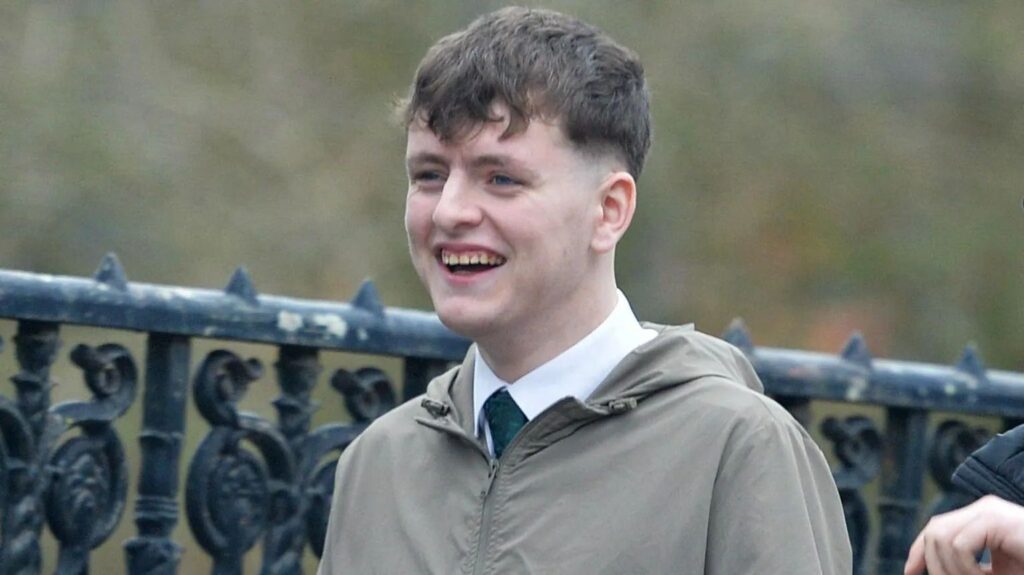
Ciaran Wason, who was 17 at the time, was part of a group who threw lit fireworks, bricks, bottles and other items towards the rival team’s supporters in Glasgow city centre on 15 December 2024.
That day had already been marked for a major fixture between Celtic and Rangers at Hampden Park, but instead of anticipation inside the stadium, attention was pulled towards disorder outside it.
Glasgow Sheriff Court heard that before the game, 100 Rangers fans dressed in dark clothing and face coverings went to a Celtic bar in the Merchant City area.
Rangers supporters banged on windows and headed back towards the city centre, while an equal-sized group of Celtic fans dressed in green clothing and Irish tricolour face coverings assembled in the city’s Gallowgate.
The group then went to the city centre’s Argyle Street where Wason, now 19, of Barrhead, East Renfrewshire, joined them.
Members of the public – who were reported to be “frightened and scared” – were forced to take refuge in nearby shops while police officers drew batons at the Celtic fans.
The disruption did not remain static. Vehicles were unable to move as the disturbance broke out on the roads, turning busy streets into a temporary no go zone. Police eventually managed to bring control, forming a cordon and separating the groups before escorting supporters away from the centre.
Rangers fans were then put on a train from Glasgow Central to Mount Florida, while the Celtic supporters were marched to the game on foot.
What followed in court months later was a different kind of reckoning. Wason was arrested on 3 April 2025 and pleaded guilty to a single charge of breach of the peace.
For someone so young at the time, the court had to weigh intent, presence, and consequence.
Mark Chambers, defending, told the court: “He was 17 at the time.
“There was no individual act attributable to him but he was there.
“He plans to enrol in a college engineering course.”
Sheriff Shona Gilroy ultimately ordered Wason to carry out 250 hours of unpaid work alongside a three year football banning order.
A match that was meant to define a cup final day instead became another reminder of how quickly rivalry can drift away from the stadium and into consequences that last far longer than ninety minutes.