 Nafisa
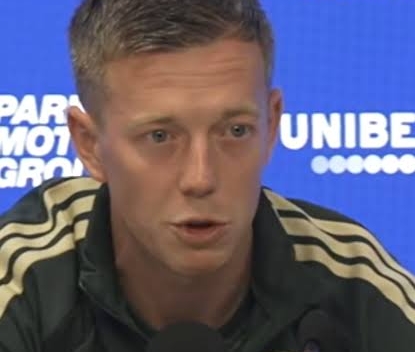
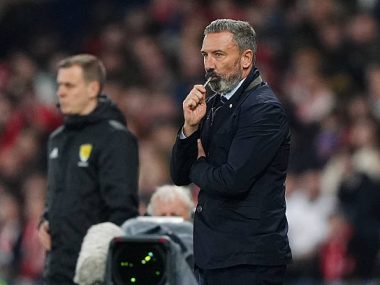
Celtic captain Callum McGregor has raised eyebrows with a revealing public assessment of the team’s tactical problems, with his comments potentially exposing growing frustration over Martin O’Neill’s approach during a difficult spell for the Hoops.
The midfielder stopped short of directly criticising his manager, but his comments about players being deployed outside their natural positions have raised serious questions about the system O’Neill has been using.
And with Celtic struggling to produce consistent performances, McGregor’s intervention could hardly have come at a more uncomfortable time.
The Hoops have scored 16 goals and conceded 17 across their last nine competitive matches, recording just three wins, one draw and five defeats. For a club with Celtic’s ambitions, those numbers make for grim reading.
While O’Neill’s side remain four points clear of Rangers in the Premiership, their recent performances have exposed problems that cannot simply be ignored.
Speaking to The Celtic Way, McGregor appeared to identify one of the biggest issues affecting Celtic’s performances, suggesting that players asked to operate in unfamiliar positions can struggle to deliver what the team actually needs.
“The players behave like a winger, or they behave like a striker.
“You can get away with it for a few games but if it’s a striker playing as a winger, you are going to get that behaviour a lot of the time.
“You’ve got enough quality so you can score goals and get away with it. But we have to try to get the team functioning the way it should.”
Those words are particularly interesting because they appear to touch directly on O’Neill’s attacking selections.
Celtic have frequently relied on players performing roles that are not necessarily their natural positions, and McGregor’s suggestion that this can affect how the entire team functions raises questions about whether the manager’s tactical decisions are contributing to the club’s current difficulties.
It also offers a possible explanation for why summer signing Kasper Høgh has struggled to make the expected impact since arriving from Bodø/Glimt.
The Danish striker has managed just three goals in 15 appearances, with all three coming in the same match against Kilmarnock in August.
However, has Celtic really been doing enough to get the best out of him?
Against Dundee United, Høgh started centrally while Camilo Durán and Callum Osmand, both natural strikers, occupied the wide attacking positions.
It was an unusual attacking arrangement, with Celtic lacking the natural width that can make life difficult for opposition defenders and create better opportunities for a central striker.
O’Neill eventually responded at half-time by introducing Jota and Haissem Hassan, bringing genuine wide players into the game.
But there was a frustrating twist for Høgh: the Danish striker was withdrawn at exactly the same time.
Jota subsequently delivered the cross that allowed Liam Scales to score Celtic’s equaliser, demonstrating the difference that natural width and quality delivery can make to the team’s attacking play.
Høgh has yet to enjoy a sustained run alongside Jota, Hassan and Kieran Tierney, although Jota’s recovery from injury has complicated O’Neill’s options.
It therefore remains difficult to judge the striker fairly when Celtic have not consistently provided the kind of service that could bring out his strengths.
McGregor’s comments also raise questions about what happens when Celtic lose possession.
When players are operating outside their natural positions, the movement, positioning and distances between teammates required to execute an effective counter-press can become harder to maintain.
That could be contributing to Celtic’s repeated struggles to regain control of matches, although the midfield structure and defensive protection have also been problematic.
And McGregor appeared to question whether the team’s current approach is sustainable over an entire season.
“For players, you want control in games as ultimately that cuts everything else down.
“We have been free flowing and scored goals. But it’s over a 60 game period. How sustainable is it really? That is the question.
“We are getting closer to that in the second half against United and the Motherwell game. But there is a long way to go and a lot of games to play. The team will get better.”
That is a significant message from the Celtic captain.
McGregor has not openly turned against O’Neill, but his comments suggest that simply relying on attacking quality and individual moments is not enough to sustain Celtic’s performances across a demanding campaign.
The manager now faces pressure to establish a more settled system, get the best out of his summer signings and restore the control that has been missing from too many matches.
Celtic’s 7-1 victory over Hearts showed what this team can produce when everything clicks, but five defeats in nine competitive games tell a very different story.
With Falkirk and Beşiktaş next on the fixture list, O’Neill has an opportunity to address those concerns.
However, McGregor’s public comments have inevitably placed the spotlight on the manager’s tactical decisions, while leaving supporters to wonder whether Celtic’s problems run deeper than a disappointing run of results.

 Nafisa