 Nafisa
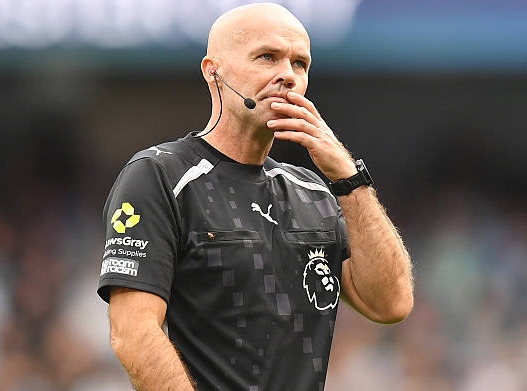
Paul Tierney has come under scrutiny following Leeds United’s narrow defeat to Arsenal, with the match officials facing questions over several contentious decisions during Saturday afternoon’s encounter at the Emirates Stadium.
Daniel Farke’s side left North London empty-handed after a 2-1 loss, but the result was not the only talking point to emerge from a fiercely contested Premier League fixture.
Leeds supporters were left frustrated by the distribution of yellow cards and a series of decisions they felt had gone against the visitors at crucial moments.
The disciplinary record added fuel to the debate. Leeds received five yellow cards, while Arsenal were shown just one, awarded to Martin Ødegaard.
Although that difference does not automatically prove the referee applied the laws inconsistently, it has provided ammunition for those questioning whether both sides were treated equally.
With Leeds having taken the lead through James Justin in the 55th minute, the visitors had reason to believe they could secure a historic result at a ground where victories have proved difficult to come by.
Instead, Arsenal fought back through Riccardo Calafiori and Bruno Guimarães, leaving Farke’s players to reflect on missed opportunities and contentious moments.
The criticism surrounding Tierney has raised questions about whether the Professional Game Match Officials Limited (PGMOL) will review the officiating. However, there has been no verified announcement that Tierney has been suspended or removed from future appointments following the match.
Leeds supporters question the disciplinary decisions:

One of the most prominent talking points involved Ao Tanaka’s first-half booking following his challenge on Arsenal youngster Myles Lewis-Skelly.
Leeds supporters questioned whether the midfielder had committed an offence worthy of a yellow card, with some believing he had read the situation correctly and won possession as his opponent attempted to dribble past him.
The decision became particularly frustrating for the visitors because several Leeds players were subsequently booked during the match. Ethan Ampadu, Jaka Bijol and James Justin were among those disciplined, contributing to the five yellow cards shown to Farke’s team.
Arsenal, meanwhile, received only one yellow card, with Ødegaard cautioned.
The figures alone cannot establish whether the referee was wrong. Each challenge must be judged on its own circumstances, including the nature of the contact, the force involved and whether the player committed a reckless foul or stopped a promising attack.
Nevertheless, the disparity is likely to remain a talking point among Leeds supporters, particularly given their concerns about the consistency of the decisions.
Paul Tierney’s decisions face further scrutiny:
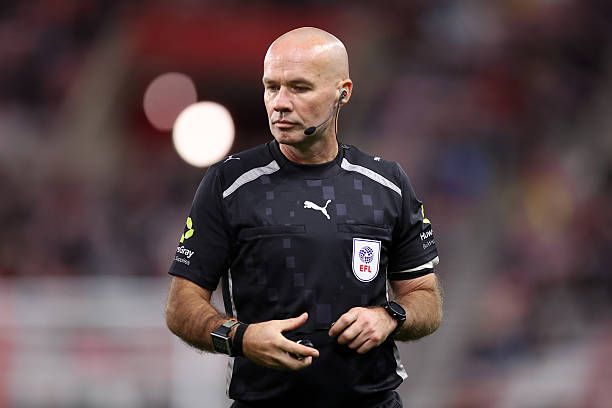
The debate extends beyond the number of bookings. Leeds also had reason to be frustrated by moments in which they believed Arsenal should have faced greater punishment.
Dominic Calvert-Lewin was involved in a penalty appeal that attracted attention, although the available information does not establish an official finding that Tierney made an incorrect decision.
Such incidents can lead to scrutiny of both the referee and the video assistant referee, particularly when supporters believe a decision could have influenced the outcome.
However, there is an important distinction between supporters questioning a call and an official review concluding that the referee made an error. No confirmed PGMOL statement has established that Tierney’s performance warranted a suspension.
A formal disciplinary measure against a match official should not be reported as fact without reliable confirmation from PGMOL or credible reporting citing the organisation.
Arsenal comeback leaves Leeds with more questions:

The officiating debate followed a match in which Leeds had initially put themselves in a strong position.
Justin’s second-half goal gave the visitors the lead, rewarding their disciplined performance and raising hopes of taking points away from the Emirates.
Arsenal responded through Calafiori, who finished from close range after Noni Madueke and Ben White combined to create the opportunity. Guimarães then completed the comeback in the 70th minute, finding the far corner to secure all three points for the hosts.
Farke was left disappointed after his side had competed well for long periods, while Leeds supporters were frustrated by the combination of missed opportunities and contentious refereeing decisions.
The defeat ended Leeds’ unbeaten start to the league campaign, making the outcome particularly difficult to accept after such an encouraging performance.
Will PGMOL take action?
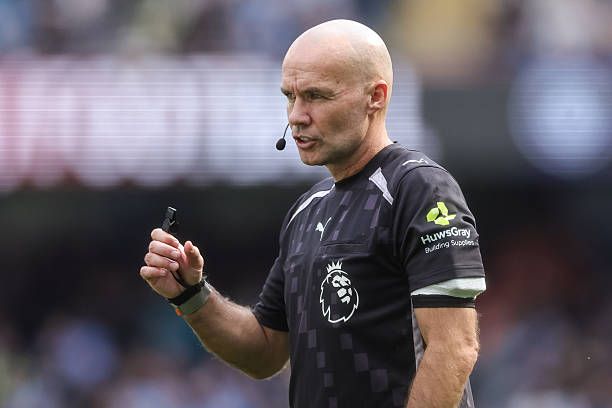
The central question is whether the criticism will lead to a formal review of Tierney’s performance.
PGMOL and the Premier League have mechanisms for reviewing contentious match incidents, but public criticism does not automatically result in a referee being suspended. Any claim that Tierney has been punished would need to be supported by an official announcement or reliable reporting confirming the decision.
For now, the confirmed facts are that Tierney officiated Arsenal’s 2-1 victory, Leeds received five yellow cards compared with Arsenal’s one, and the match produced several decisions that have prompted debate.
Whether PGMOL will issue further clarification remains unconfirmed.
Leeds supporters may feel that the officiating deserves closer examination, but the claim that Tierney has already been suspended goes beyond the evidence currently available. Until an authoritative source confirms such a decision, the story remains one of growing scrutiny rather than a confirmed punishment.


 Nafisa