 Nafisa
Rangers did not simply beat Celtic 3-0 at Ibrox, they found a way to suffocate the visitors in the areas where Martin O’Neill’s side normally look to build their attacks.
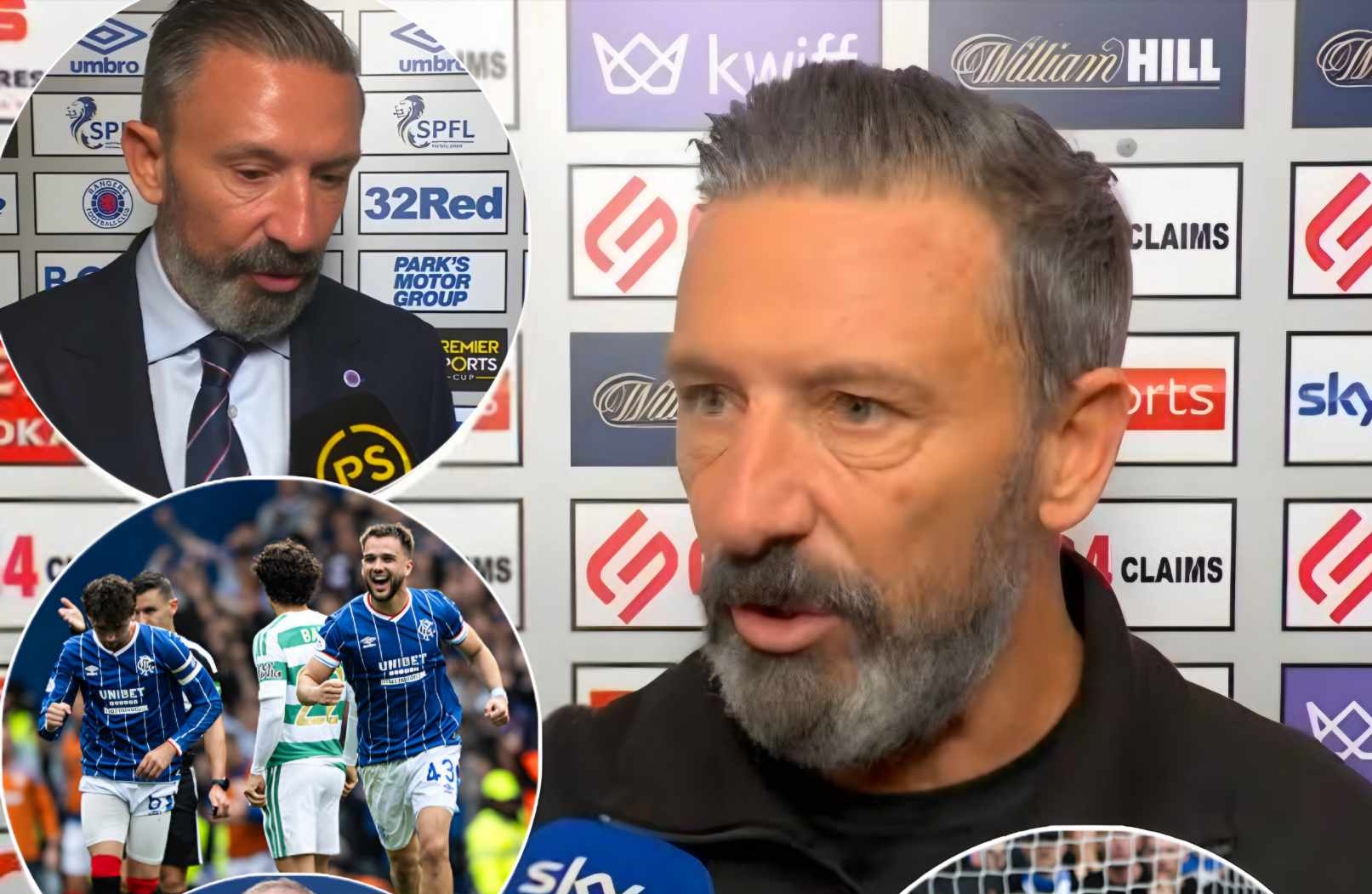
Dan Neil’s brilliant brace and Kevin Kelsy’s composed finish will understandably dominate the headlines after a statement Premier Sports Cup victory, but there was another detail buried inside Derek McInnes’ post-match explanation that may have revealed exactly where Rangers believed Celtic could be hurt.
And remarkably, it points towards a player many supporters would not have expected to be at the centre of Celtic’s problems.
McInnes had already spoken before the game about the importance of Rangers pressing Celtic properly, refusing to allow their opponents to settle into their usual rhythm and making the most of the huge Ibrox crowd.
On the day, that plan worked almost perfectly.
Rangers repeatedly forced Celtic backwards, attacked the spaces around the edge of the penalty area and made it difficult for O’Neill’s midfield to establish any meaningful control. The result was a Celtic side that struggled to connect its defence with its attacking players for long periods.
But one Celtic player appeared to be particularly important to the way Rangers approached that problem.
The player in question was Benjamin Nygren.
The Celtic midfielder started in the No.8 role and was expected to help provide the link between Callum McGregor and the attacking players ahead of him. In theory, that makes him one of the players Celtic need to find space for when attempting to play through an aggressive Rangers press.
Instead, Rangers appeared determined to make sure he never had the time or freedom required to influence the game.
One of the most interesting aspects of the tactical battle was James Penrice’s movement.
Rather than simply remaining in his usual position, the Rangers left-back was willing to step aggressively into midfield areas whenever Nygren became available as a passing option.
That meant Nygren was not simply being asked to beat one opponent. He was being denied the time required to turn, carry the ball or connect with Celtic’s forward line.
The effect became increasingly obvious.
Nygren was repeatedly forced into uncomfortable situations as Rangers closed down the central areas, while Celtic found it increasingly difficult to progress the ball cleanly through the middle of the pitch.
He was booked in the 19th minute after sliding in on Kevin Kelsy, and from that point onwards Rangers continued to make the midfield battle extremely uncomfortable for him.
The fascinating part is that McInnes’ comments after the match appear to support the idea that this was not accidental.
“Obviously Dan’s going to get highlighted for his goals. His two goals were brilliant, different types of finishes,” McInnes said.
“But that space at the edge of the box, we knew we could occupy that space at times if we attacked properly and we looked after the ball. If we forced Celtic back in that space.
“We still need people to step up and show their quality. He gets the light shining on a wee bit today because of the goals. But I thought his performance was really strong as well.
“As were Nico and James in there. I thought the three of them were terrific. And it was a big part of us getting some sort of ascendancy in the game.”
The obvious headline from those comments is Dan Neil, and rightly so.
The Rangers captain scored twice from the edge of the Celtic box, with his second goal particularly spectacular as he curled the ball into the top corner beyond Sam Johnstone.
But McInnes’ description of the “space at the edge of the box” also explains why Rangers were so keen to disrupt Celtic’s midfield connections before the ball reached that area.
Nygren was supposed to help Celtic move through those central zones.
Instead, Rangers made sure Celtic’s midfield struggled to function as a unit.
Once that happened, McInnes’ side could repeatedly force Celtic deeper, win the ball and attack the exact spaces he had identified beforehand.
That created the conditions for Neil to repeatedly arrive in dangerous positions.
Rangers’ first goal demonstrated the plan perfectly.
Ryan Naderi helped move the ball into the left channel before Kelsy found Neil inside the area. The midfielder kept his composure and fired into the bottom corner.
The second-half goal was even more revealing.
With Celtic struggling to close down the space around the edge of the box, Neil collected possession and produced a stunning finish into the top-right corner.
By then, Rangers were completely in control.
Kelsy’s goal in between Neil’s two strikes only added to Celtic’s misery, with Penrice again involved in creating the opportunity.
That is why Nygren’s role in the defeat is so intriguing.
It would be unfair to suggest that one player alone caused Celtic’s 3-0 defeat. Rangers were excellent collectively, while several Celtic players struggled to impose themselves.
But if McInnes was looking for a way to disconnect Celtic’s midfield and prevent the visitors from establishing their normal passing rhythm, Nygren was one of the most logical players to target.
By taking away his time and space, Rangers reduced one of Celtic’s potential links between McGregor and the front three.
And once that connection was broken, the rest of McInnes’ tactical plan began to fall into place.
Celtic will now have to work out how to respond when the two sides meet again in the league at Celtic Park next weekend.
For Rangers, meanwhile, this was much more than a derby victory.
It was proof that McInnes had identified a specific weakness, built his pressing plan around it and watched his players execute it almost perfectly.
The scoreline said 3-0.
McInnes’ comments afterwards suggested Rangers knew exactly why it happened.

 Nafisa