 Nafisa
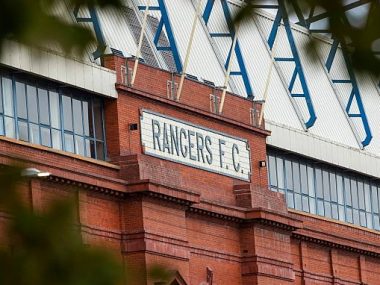
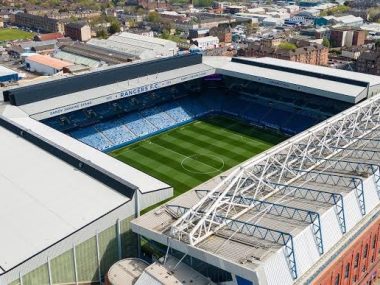
Rangers were made to work for another precious three points at Ibrox on Wednesday night, but Derek McInnes’ side eventually found a way to get over the line.
The Light Blues looked the more dangerous side during the opening 45 minutes, dominating possession and spending long spells around the St Mirren penalty area without finding the breakthrough.
However, the pattern changed after the interval.
Rangers struggled to maintain the same level of control and St Mirren began to find opportunities of their own, with the visitors showing enough threat to suggest they could leave Ibrox with a point.
For all their pressure and territorial advantage, Rangers were seemingly heading towards another frustrating evening in front of goal.
Then came the moment that changed everything.
With the clock ticking into stoppage time, Ryan Naderi found substitute Bojan Miovski, who showed tremendous composure to lift the ball over St Mirren goalkeeper Jacob Chapman and send Ibrox into raptures.
The 91st-minute finish secured a 1-0 victory and handed Rangers their fourth consecutive Premiership win.
It was another important result for McInnes, particularly given the circumstances surrounding the squad and the attacking options currently available to him. Rangers have now collected 10 points from their opening five league matches and are beginning to build some serious momentum ahead of a huge period in their season.
But while the late victory provided plenty for Rangers supporters to celebrate, there is another development that could have a significant impact on the club’s future European ambitions.
And it concerns UEFA’s latest changes to the qualifying process.
UEFA change could make European route significantly tougher
UEFA have tinkered with the Europa League qualifying process once again, with the changes set to create a potentially difficult situation for Scottish clubs hoping to progress deep into the competition.
From next season, the final qualifying round, also known as the play-off round, is set to be divided between a champions path and a non-champions path.
That distinction could prove particularly important for Rangers.
The Scottish Premiership champions will enter the Champions League at the second qualifying round, while the runners-up and third-placed side will enter the Conference League at the same stage.
The Scottish Cup winners will enter the Europa League at the first qualifying round unless they have already secured European football through their league position. In that situation, the European place would pass down the Premiership standings.
Either way, the club entering the Europa League through that route would be placed into the non-champions path.
That is where the potential problem begins.
Should the Scottish representative make it all the way through to the Europa League play-off round, the new structure means they would no longer be able to face clubs dropping out of the Champions League qualifying process.
That could remove some of the more favourable potential opponents from the draw while simultaneously increasing the importance of coefficient rankings.
And Rangers’ coefficient position could become a major concern.
Rangers face potential seeding problem
The coefficients of Scotland’s leading clubs have fallen to a level which could make it increasingly difficult for Rangers or Celtic to secure a seeded position in the Europa League’s non-champions play-off draw.
For any other Scottish club, the situation would be even more challenging.
Under the current scenario outlined in the changes, a non-champions route could potentially leave a Scottish representative facing sides of considerably greater European pedigree.
This season, examples of the type of opposition involved included clubs such as Anderlecht, Benfica and Viktoria Plzen.
That represents a considerable jump in difficulty compared with some of the opponents Scottish clubs have encountered in earlier qualifying rounds.
There is, however, one major exception.
If the Scottish Premiership champions enter the Champions League qualifying rounds and subsequently drop into the Europa League play-off round, they would retain the protection associated with the champions path.
That means they would be seeded and would also avoid the highest-ranked clubs coming through the non-champions route.
For Rangers, that distinction could become hugely important if they are able to challenge Celtic for the Premiership title and secure Champions League qualification.
The new system therefore creates something of a double-edged sword for Scottish football.
Finishing higher in the domestic table brings the obvious reward of Champions League football, but failing to progress through the Champions League could potentially provide a more favourable route into the Europa League than qualifying for that competition directly through a lower league position.
Rangers’ European disappointment
The importance of coefficient points has already been highlighted by the experiences of Scottish clubs in Europe.
Celtic somehow missed out on Champions League football this season after surrendering a four-goal first-leg advantage against LASK before dropping into the Europa League.
Rangers endured an even more disappointing European campaign, exiting the Europa League qualifying route against Jagiellonia Bialystok before subsequently suffering another defeat to Jablonec in the Conference League.
Hearts also experienced the difficulty of navigating the different European routes.
They dropped from the Champions League qualifiers to the Europa League after losing to Sturm Graz, before being beaten by Benfica. They eventually recovered in the Conference League play-off, defeating Rapid Vienna to reach the league phase.
Motherwell and Hibernian were both eliminated at the play-off stage, losing to Freiburg and Gent respectively.
The results underline just how fine the margins can be for Scottish clubs when they enter the latter stages of UEFA qualification.
For Rangers, Wednesday night’s victory over St Mirren will understandably dominate the immediate headlines.
Miovski’s late finish gave McInnes another huge boost and extended their winning run to four league matches.
But beyond the celebrations at Ibrox, UEFA’s latest qualifying changes could have a major bearing on how Rangers approach their European ambitions in the seasons ahead — particularly if their coefficient does not improve.
And with Celtic next on the horizon, Rangers will have little time to dwell on it.
The Old Firm is coming to Ibrox on Sunday.


 Nafisa