 Nafisa
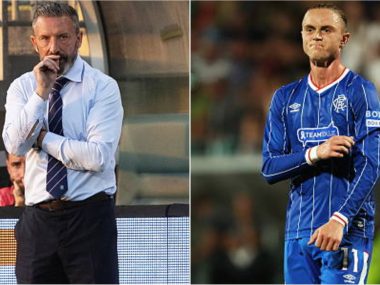
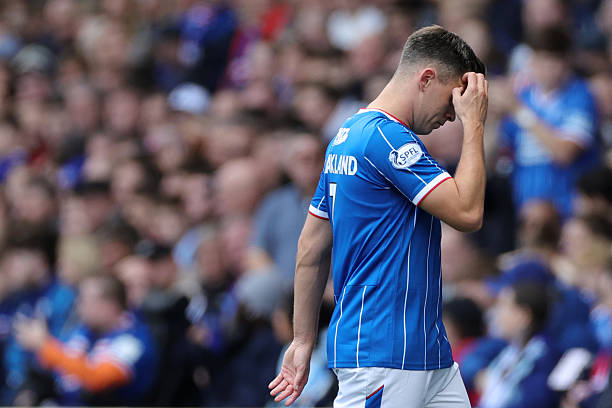
Rangers fans have been handed a major update on Lawrence Shankland’s injury after the striker was forced off during Saturday’s 1-0 victory over Motherwell at Ibrox.
The Scotland international had been building real momentum in recent weeks, finding the net three times across his previous two appearances and beginning to show exactly why Rangers moved to bring him in during the summer.
There was therefore plenty of concern around Ibrox when Shankland went down inside the opening stages against Motherwell, with the Rangers striker unable to continue and Ryan Naderi introduced in his place.
Naderi would go on to provide the decisive moment, scoring in the first half to secure another important league victory for Derek McInnes’ side.
But the result was overshadowed by the fitness concern surrounding Shankland, particularly given the timing of the injury and his recent return to form.
Now, Rangers supporters have been told just how long the striker could potentially be missing.
Worst-case scenario laid out for Lawrence Shankland
McInnes admitted after the match that Shankland’s injury could be a serious one, with the Rangers manager revealing that the striker believes it feels similar to the hamstring problem he suffered while at Hearts.
“Lawrence said he has a similar feeling to the hamstring injury he had at Hearts last January when he was out for three months,” McInnes said.
“Obviously we don’t want to speculate too much. But he says it feels similar to in the same area, so we’ll get him scanned on Monday.”
That previous injury kept Shankland out for around three months, meaning there is now genuine concern that Rangers could once again be without their main striker for a significant period.
If the current problem proves to be as serious as the one he suffered at Hearts, Shankland could miss at least 13 matches for Rangers.
That would represent a huge blow to McInnes, particularly with a number of important fixtures approaching.
Rangers are due to face St Mirren in the league before the highly anticipated Premier Sports Cup quarter-final against Celtic at Ibrox on September 13. The Old Firm clash will then be followed by another demanding run of league fixtures.
A three-month absence could see Shankland miss matches against Celtic, Kilmarnock, Dundee, St Johnstone, Hearts, Aberdeen, St Mirren, Motherwell, Dundee United, Falkirk and Hibernian, depending on the exact recovery timeline and fixture scheduling.
There is also the September international break to consider, which could alter the precise number of competitive matches he misses.
For Rangers, however, the immediate priority is establishing the extent of the damage rather than attempting to put an exact return date on it.
The club will have to wait for the scan before knowing whether Shankland is facing a lengthy spell on the sidelines or a considerably quicker recovery.
His absence would nevertheless leave McInnes with a significant selection headache.
Shankland had only recently started producing the kind of goals Rangers supporters expected when he arrived, and losing him just as his confidence and sharpness appeared to be returning could hardly have come at a worse time.
Could Falkirk be to blame for Shankland injury layoff?
There was another interesting detail from McInnes when he discussed the circumstances surrounding Shankland’s injury.
Rangers had played Falkirk on Wednesday, with that match taking place on a 4G surface, before returning to Ibrox for the Motherwell fixture.
McInnes suggested that the change in playing surface could potentially be a factor, although he was careful not to claim that it had caused the injury.
“You know, his output was really high on Wednesday at Falkirk on the 4G pitch,” McInnes said.
“Sometimes going that from pitch to pitch, the different surface can make you a wee bit more vulnerable.
“But he says he felt fine going into the game, so, and there was nothing really that he did in the game that he was aware of, he just felt it pull up.”
That final point could be particularly significant.
Shankland apparently did not enter the Motherwell match carrying an obvious problem and there was no specific incident he could immediately identify as the moment that caused the injury.
Instead, he simply felt the hamstring pull during the early stages of the contest.
That leaves Rangers waiting anxiously for the scan, with McInnes understandably unwilling to make a definitive prediction before receiving the medical assessment.
The manager will now hope that the injury is less severe than Shankland fears.
For the moment, though, the three-month timeframe associated with his previous hamstring injury represents the nightmare scenario for Rangers.
Should the latest problem ultimately follow a similar recovery pattern, the club could be forced to navigate a substantial portion of the opening months of the campaign without the striker who had just started to find his goalscoring rhythm.
Naderi’s goal against Motherwell at least ensured Rangers did not pay an immediate price for losing Shankland, but the bigger concern is what happens if the striker is unavailable for the weeks ahead.
The upcoming scan will provide the first major indication of whether Rangers are facing a short-term setback or the kind of lengthy absence that could reshape McInnes’ plans for the early part of the season.

 Nafisa