 Nafisa
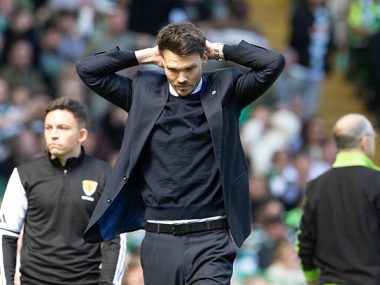
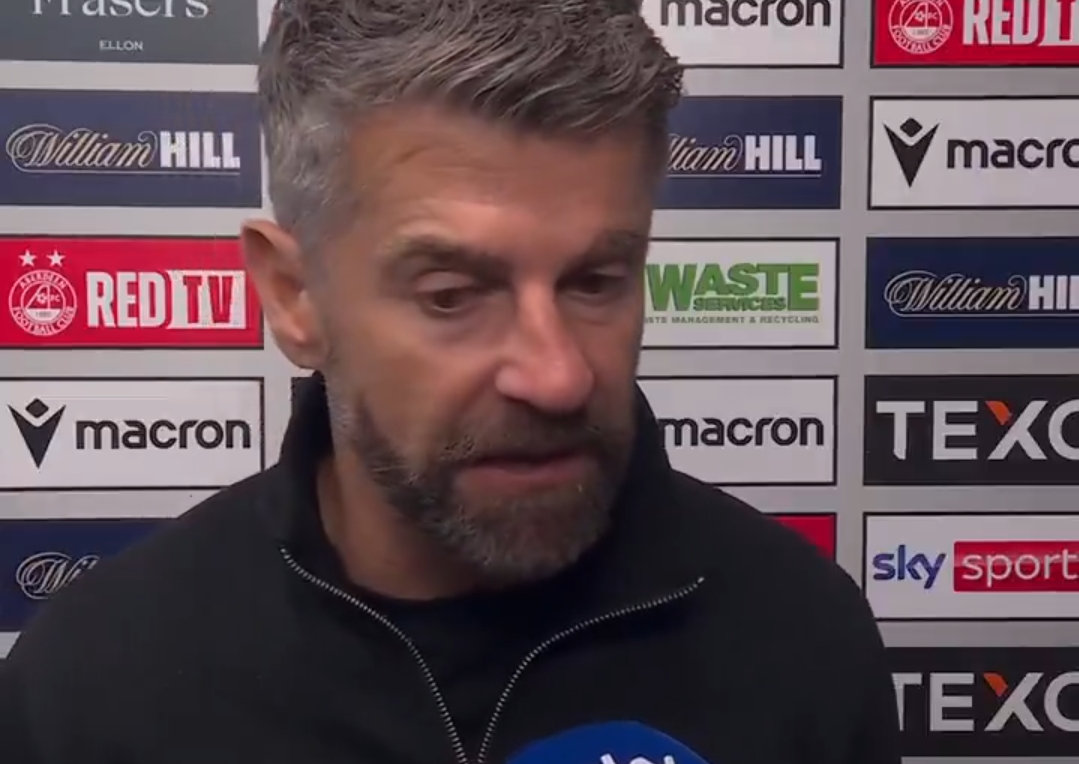
Stephen Robinson has broken his silence on the controversial VAR decisions that went against Aberdeen during their 1-0 defeat to Rangers — but the Dons boss has revealed he is effectively being forced to keep his real thoughts to himself.
Aberdeen left Pittodrie frustrated on Sunday after Lawrence Shankland’s 69th-minute penalty handed Rangers their first Scottish Premiership victory of the season.
For Derek McInnes, it was a welcome result after the pressure had intensified following Rangers’ humiliating Conference League exit to Jablonec on penalties in midweek.
For Robinson, though, the defeat raised a completely different set of frustrations.
The Aberdeen boss was left particularly puzzled by two incidents involving Kevin Nisbet and Dujon Sterling, with the decisions ultimately becoming some of the biggest talking points from the game.
And while Robinson clearly had plenty to say, he stopped himself from giving the full verdict.
Robinson reveals why he cannot speak freely
With Aberdeen trailing 1-0, Nisbet went down inside the Rangers penalty area while battling with Sterling, but referee Matthew MacDermid waved away the appeals.
Then, in the 83rd minute, Aberdeen thought they had found an equaliser.
Nisbet’s initial header was saved by Rangers goalkeeper Ivor Pandur before Mitchy Ntelo saw his follow-up effort stopped. Nisbet reacted quickest to the loose ball and headed home what appeared to be his 10th goal of the season.
The celebrations did not last.
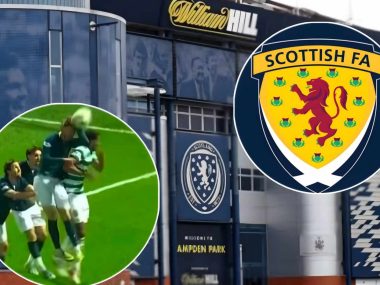
VAR intervened and MacDermid was sent to the monitor to review a challenge involving Nisbet and Sterling. The referee eventually decided Nisbet had fouled the Rangers defender before his first header, resulting in the goal being ruled out.
Robinson was subsequently asked for his assessment of the two incidents.
His response suggested he was anything but happy with what he had seen.
“If I could give my thoughts, but the authorities make sure we don’t give our thoughts.
“If you hear it from me, I’ll get a six-game ban, and I can’t control decisions.
“I can’t control what VAR sees as not enough force and too much force.
“You all saw the game and the only thing I can comment on is I don’t know who judges the amount of force.
“There wasn’t enough for Kevin to get a penalty and there was enough to disallow the goal.
“Someone has made that decision rightly or wrongly and it certainly affects the game.
“They seemed quite similar to me but I’m not a referee.
“I can only control the things that I can in terms of our performance.
“VAR’s played an integral role today.”
It was perhaps the closest Robinson came to openly criticising the decisions without risking further punishment.
The Aberdeen boss clearly felt there was an inconsistency in how the level of force was judged in the two separate incidents, but rather than risk a lengthy suspension, he opted to let his words speak for themselves.
Robinson refused to confront referee
There was also no attempt from Robinson to seek an explanation directly from MacDermid after the final whistle.
Asked whether he had spoken to the referee about the Nisbet incidents, the Aberdeen manager was unequivocal.
“No. I don’t go anywhere the man.
“I want to be in the dugout and want to help the players and the staff and the players.”
The defeat leaves Aberdeen with just three points from their opening three Premiership matches, making Wednesday’s trip to Celtic Park an immediate test of their response.
The Dons went into the Rangers match unchanged after their impressive 3-0 Premier Sports Cup victory over Dundee.
Rangers, meanwhile, arrived in Aberdeen still licking their wounds from their European disaster.
But despite that, McInnes’ side managed to grind out the result, with Shankland’s penalty ultimately separating the teams.
Now the attention turns to Parkhead.
Aberdeen will face the Scottish champions on Wednesday, while Robinson will hope his players can turn their frustration into a response rather than allow Sunday’s defeat to become another setback.
For now, though, the VAR debate is likely to continue — particularly after Robinson’s carefully worded admission that he believes the two Nisbet incidents looked remarkably similar, despite producing completely different outcomes.

 Nafisa