 Nafisa
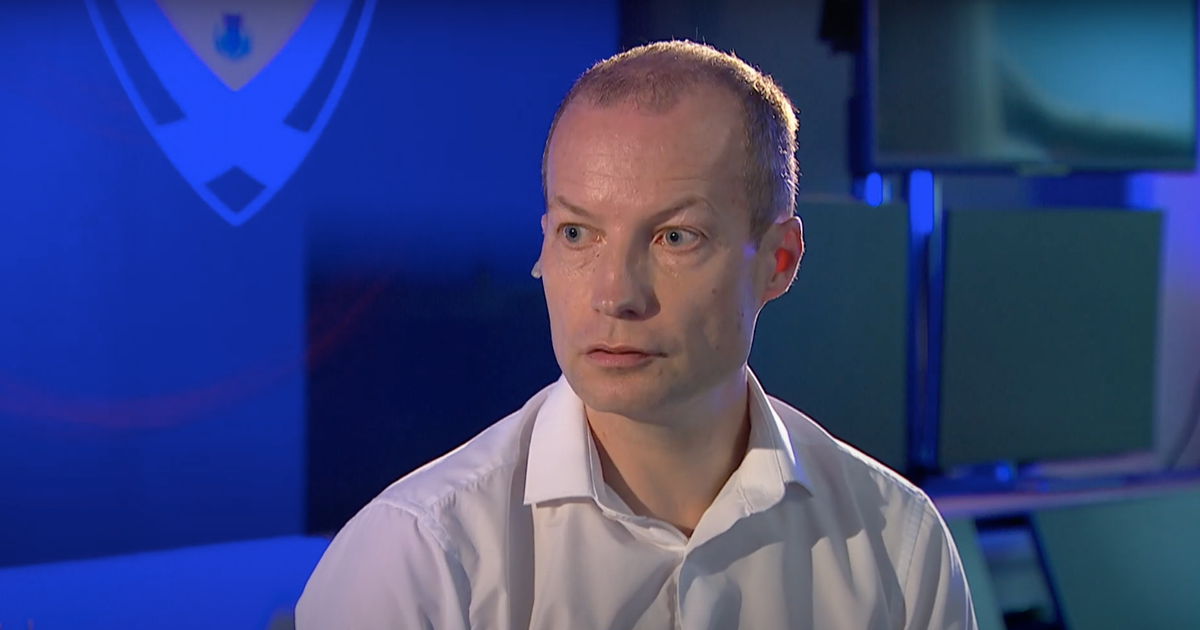
Celtic have been handed a significant refereeing admission after Scottish FA head of referees Willie Collum confirmed that Martin O’Neill’s side should have been awarded a penalty during their victory over Motherwell.
Despite securing a 2-0 win at Fir Park, Celtic could have had an opportunity to extend their advantage when Callum McGregor’s effort struck Motherwell midfielder Lukas Fadinger’s arm.
The incident was reviewed during the match, but the officials decided against awarding a spot-kick, judging that Fadinger’s arm was not in an unnatural position.
However, Collum has now revealed that the decision should have gone Celtic’s way, admitting that the defender’s arm was sufficiently away from his body to make the handball punishable.
The admission raises fresh questions about the VAR decision-making process and how similar incidents will be judged in Scottish football going forward.
Willie Collum explains why Celtic should have received a penalty
Speaking on Sky Sports’ VAR Review Show, Collum acknowledged that Fadinger was attempting to block McGregor’s shot while turning his body away from the ball. Nevertheless, he believes the position of the Motherwell player’s arm meant a penalty should have been awarded.
He said: “Again, I’ve got great sympathy for the Motherwell player because I think he is trying to avoid the contact.
“As the shot comes in, he’s turning his body away, he’s bringing his leg up to block the ball.
“There’s definitely discussion between the referee and the VAR about the arm tucked in.
“I think the elbow’s tucked in, but the Motherwell player takes a real risk by his arm out from the body here.
“And in our opinion, after reviewing this incident, our coaching going forward is that this should be a penalty kick, should be awarded in this incident.”
Collum’s explanation acknowledges the difficulty of assessing handball incidents, particularly when a player is attempting to block a shot at close range. However, his conclusion was clear: the officials should have awarded Celtic a penalty.
Although the decision did not ultimately prevent O’Neill’s team from collecting all three points, the admission confirms that Celtic were denied an opportunity to potentially increase their lead.
Collum questions the VAR decision
The SFA refereeing chief also addressed the argument that the ball had struck Fadinger’s arm from too close a distance for the incident to warrant a penalty.
Collum disagreed with that interpretation, suggesting that the proximity of the shot did not justify overlooking the position of the defender’s arm.
He added: “I don’t think it’s very, very close.
“If we’re saying that we can award a penalty kick for the Milne incident, then we also need to consider this.
“But to be very clear and transparent, our coaching going forward here is that if this is not identified on the field, we expect a penalty kick to be awarded after the referee goes to the monitor.”
Those comments are particularly significant because they address not only the original on-field decision but also what VAR should have done when the incident was reviewed.
Collum’s position is that, if the referee fails to identify the offence during the match, the expectation should be for the incident to be reviewed at the monitor and a penalty awarded.
That leaves the original decision open to scrutiny, especially given that the technology is intended to help officials correct clear errors in important moments.
What the admission means for future Scottish football matches
Collum’s comments also point towards a clearer approach to similar handball incidents in future matches.
By explaining that a player can be penalised when their arm is sufficiently away from the body, even while attempting to block a shot, he has provided guidance for referees assessing comparable situations.
The emphasis is not simply on whether a player intended to handle the ball. Instead, officials must consider the position of the arm and the circumstances in which the contact occurred.
For Celtic, the admission provides confirmation that the decision at Fir Park should have been different. However, it does not change the result, with O’Neill’s side having already secured a 2-0 victory.
The wider issue is whether the guidance will lead to greater consistency in future handball decisions across Scottish football.
Collum has now made the SFA’s position clear: Celtic should have received the penalty, and officials are expected to take the incident to the monitor and award a spot-kick if a similar offence is missed on the field.
For referees and VAR officials, that message leaves little ambiguity about the standard they are being instructed to apply going forward.


 Nafisa