 Nafisa
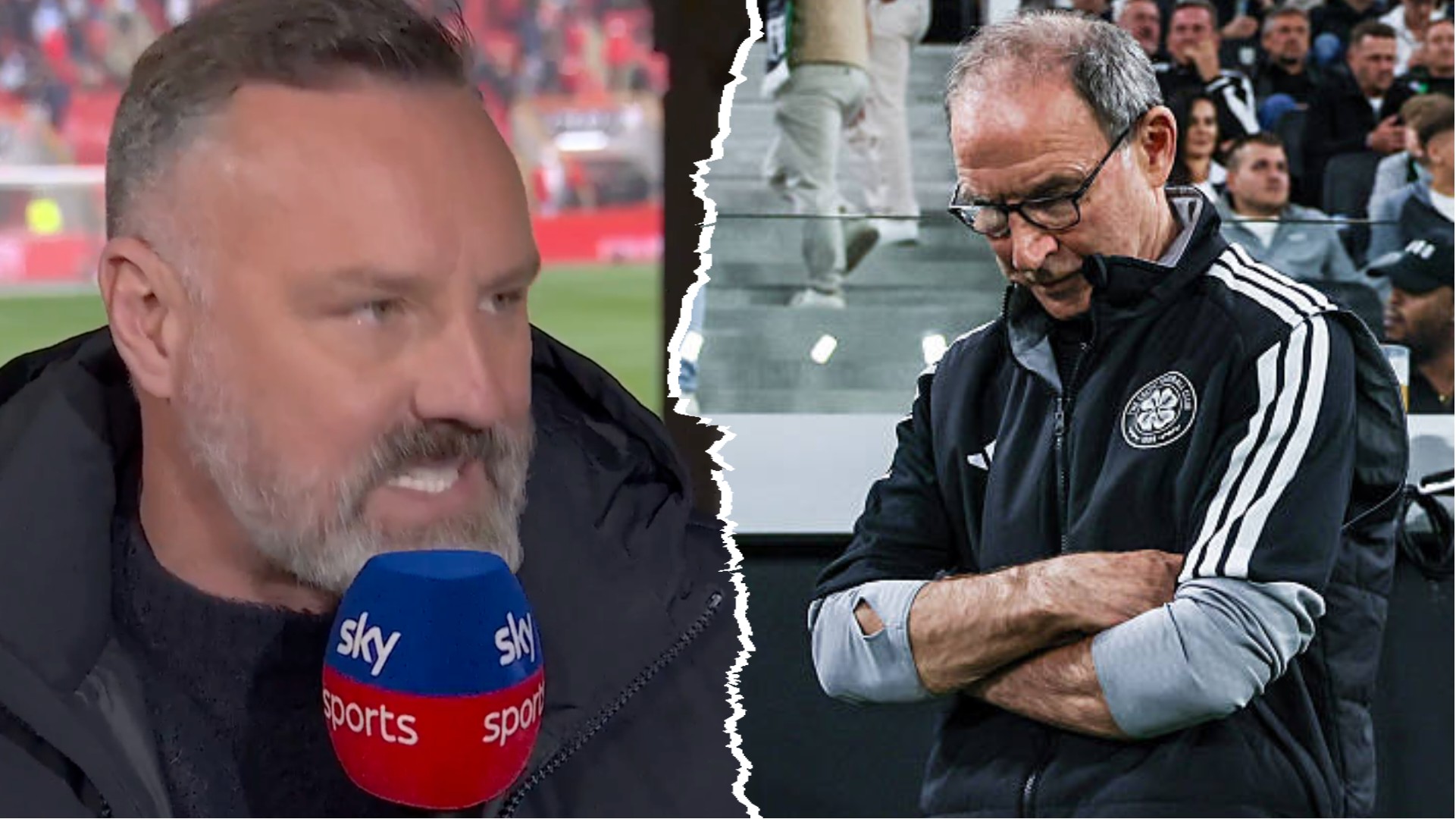
Kris Boyd questioned whether Martin O’Neill was the right man to take Celtic forward in Europe months ago, and the club’s latest collapse against Celta Vigo has given those concerns a fresh significance.
The former Rangers striker warned in May that appointing O’Neill permanently could signal a step away from Celtic’s ambitions of progressing at continental level. At the time, his argument centred on the club’s long-term direction rather than the manager’s ability to win domestic trophies.
Fast-forward to October, and Celtic’s European campaign is rapidly becoming a nightmare. O’Neill’s side have lost all three of their opening Europa League matches, leaving them 35th in the 36-team league phase after Thursday’s 2-1 defeat to Celta Vigo.
But it is another statistic that makes the situation particularly alarming.
According to GiveMeSport, Celtic have conceded 62 shots across their first three Europa League fixtures, averaging more than 20 per match. They have also conceded nine goals while scoring only three, raising serious questions about their defensive organisation and ability to compete consistently at this level.
Boyd did not make those comments in response to Thursday’s defeat, but his earlier warning about Celtic’s European ambitions now looks particularly relevant as O’Neill comes under increasing pressure.
‘DOES MARTIN ALLOW THEM TO DO THAT?’
Speaking on Go Ballistic in May, Boyd questioned whether keeping O’Neill in charge permanently would fit with Celtic’s ambition to improve in Europe.
“Martin can’t go on forever.
“That’s just the reality of when you get older.
“But for the here and now, he’s still having success.
“You look at Celtic, they were always wanting to progress to that next level.
“Does Martin allow them to do that? I’m not so sure.”
Boyd acknowledged that O’Neill could continue delivering domestic success, but questioned whether that would be enough for a club seeking to make a greater impression in European competition.
“I think Martin can win domestically, but Celtic were obsessed there for a number of years, whether it was Ange Postecoglou, whether it was Brendan Rodgers, with progression in Europe, they wanted to improve there.
“That’s not to say that Martin can’t do it, but I get the feeling that if they’re going to appoint Martin O’Neill, they’re kind of going to wait for that model we’re looking at.”
Those comments were made while Celtic were considering their longer-term managerial direction. Boyd was not declaring that O’Neill could never succeed in Europe, but questioning whether his appointment would align with the club’s ambitions to progress beyond domestic football.
Celtic’s current performances have given that debate a new urgency.
62 SHOTS CONCEDED AS CELTIC’S EUROPEAN CAMPAIGN COLLAPSES
The numbers from Celtic’s first three Europa League matches make grim reading.
O’Neill’s side have lost to Ferencváros, Benfica and Celta Vigo, conceding nine goals and scoring just three. Their position near the bottom of the league-phase table reflects a campaign that has started disastrously.
The 62 shots conceded are particularly concerning because they suggest Celtic’s problems are not limited to a handful of costly defensive mistakes.
Allowing opponents to attempt more than 20 shots per match places sustained pressure on the defence and goalkeeper. Even when Celtic manage to keep opponents out for long periods, that volume of chances makes it increasingly difficult to control matches and secure results.
Against Celta Vigo, Celtic briefly appeared to have found a way forward when Mika Baur scored early in the second half. However, Javi Rodriguez struck twice in quick succession, turning the match around and leaving the hosts without a point.
The result followed earlier European defeats against Ferencváros and Benfica, with Celtic now having no points from their opening three fixtures.
The statistics do not establish that O’Neill alone is responsible for every defensive problem. The quality of the players, individual errors and the opposition must all be considered. Nevertheless, the manager is responsible for finding a system that makes Celtic more difficult to break down, and the current figures suggest that significant work remains.
DOMESTIC SUCCESS IS NO LONGER ENOUGH TO SILENCE THE CRITICS
Celtic’s 7-1 victory over Hearts offered a reminder of their attacking potential, but it did little to settle concerns about their European performances.
The contrast between that emphatic domestic result and the defeat to Celta Vigo has become a major talking point. Celtic can still produce dominant performances in Scotland, yet their struggles against European opposition are raising questions about whether the team has the tactical organisation and consistency required at a higher level.
That is precisely the distinction at the heart of Boyd’s earlier argument.
He recognised that O’Neill could win domestically, but questioned whether Celtic would continue pursuing the same level of European progress under his leadership.
Celtic’s supporters expect domestic trophies, but they also want to see their club compete more convincingly beyond Scotland. Three straight Europa League defeats, nine goals conceded and 62 shots allowed have made it difficult to ignore the gap between those expectations and the team’s current performances.
The pressure has also intensified because Celtic’s recent problems extend beyond Europe. Their latest defeat forms part of a difficult spell that has produced just two wins in their last seven games, further increasing scrutiny of O’Neill’s position.
BOYD’S WARNING AND THE QUESTION CELTIC MUST ANSWER
Boyd’s May comments were not a demand for O’Neill to be sacked, and it would be misleading to present them as though he had predicted the current run of results.
His argument was about the direction of the club: could O’Neill deliver the domestic success Celtic expect while also taking them forward in Europe?
That question now carries considerably more weight.
Celtic have five Europa League fixtures remaining, so their campaign is not mathematically over. However, they have given themselves very little room for further mistakes, and their defensive record suggests that simply hoping for better results will not be enough.
O’Neill must find a way to reduce the number of chances opponents create, improve Celtic’s control of matches and ensure that taking the lead does not become an invitation for the opposition to take over.
The manager also needs his players to respond. Celtic had opportunities to strengthen their position against Celta Vigo, including Liam Scales’ header that struck the woodwork, but ultimately failed to protect their advantage.
There are therefore questions for the entire team, not just the man in the dugout. Yet it is O’Neill who must provide the answers and demonstrate that he can correct the problems.
IS IT TIME FOR CELTIC TO RETHINK THEIR DIRECTION?
The immediate debate is no longer simply about whether O’Neill can keep Celtic winning in Scotland. It is about whether the club can accept their current European performances while continuing to pursue their longer-term ambitions.
Boyd raised that concern months before the latest defeat, questioning whether O’Neill represented the right direction for a club determined to progress in Europe.
Now, with Celtic sitting 35th in the Europa League standings after three defeats and having conceded 62 shots in those matches, the question is becoming harder to avoid.
The statistics do not automatically justify dismissing the manager, and Celtic’s remaining fixtures provide an opportunity to respond. But the club cannot ignore the scale of the problems exposed by their European campaign.
For O’Neill, the challenge is clear: show that Celtic can become more organised, more resilient and more competitive against continental opposition.
For the board, the question is whether they remain convinced that he can deliver that improvement.
And for Boyd, whose earlier comments centred on Celtic’s European future, the latest results have brought the debate he raised in May sharply back into focus.

 Nafisa