 Nafisa
Celtic’s Champions League elimination at the hands of LASK will be remembered as one of the most painful European nights in the club’s recent history.
To surrender a 4-0 aggregate advantage and eventually lose 5-4 is difficult enough to comprehend, but the manner of the collapse has made the fallout even more uncomfortable for everyone connected with the club.
Martin O’Neill has already accepted responsibility for the defeat, while players such as Luke McCowan have faced criticism for their performances on a night when Celtic simply could not withstand the pressure.
But as the dust begins to settle, another figure is facing questions over how Celtic arrived at this point in the first place.
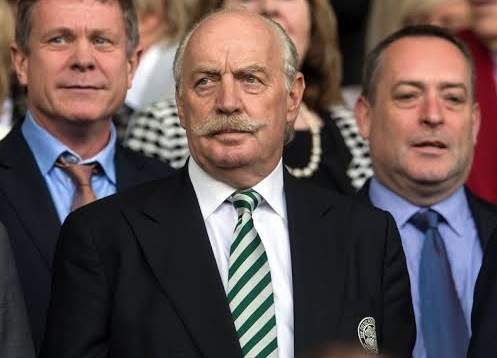
Dermot Desmond has come under increasing scrutiny after Celtic’s lack of summer recruitment was exposed so brutally in Austria.
The warning signs were already there before the LASK tie. Celtic knew they needed to strengthen after last season, yet they went into one of their biggest games of the campaign with a squad that still had obvious holes.
And when the pressure finally arrived, those weaknesses were laid bare.
Celtic’s lack of reinforcements made European embarrassment inevitable
Going into the second leg against LASK, Celtic had made only four first-team additions.
That decision was particularly difficult to understand given the significant money generated through player sales, including the departures of Arne Engels and Daizen Maeda.
Yet Celtic had not even brought in a direct replacement for Engels before the Champions League play-off.
That was not the only concern.
Important areas of the squad remained untouched, with Celtic yet to adequately address positions that had already caused problems during the previous campaign.
The lack of defensive and goalkeeping reinforcement was particularly noticeable, while several new arrivals had also not enjoyed a full pre-season with their new teammates.
Against LASK, those decisions suddenly looked far more costly.
Celtic had the opportunity to put themselves into the Champions League league phase and secure the financial and sporting benefits that come with it.
Instead, they collapsed spectacularly.
And that inevitably brings the focus back towards the people responsible for constructing the squad.
There were warning signs 12 months ago that Celtic needed a significant overhaul. The club had plenty of time to address those issues, but the opportunity was not taken.
Now, Celtic have paid the ultimate price.
They will once again have to settle for Europa League football, while the financial consequences of missing out on the Champions League could make their recruitment plans even more complicated.
O’Neill has already admitted that Celtic are “a million miles away from the finished article”, while also acknowledging that Champions League qualification could have helped attract bigger names to Parkhead.
That makes the failure to strengthen early even harder to ignore.
How bad were Celtic against LASK?
The numbers from Austria make grim reading.
Celtic managed just eight shots, with only three finding the target. They registered just one big chance and finished with an expected goals figure of approximately 0.54.
LASK, meanwhile, produced an astonishing 40 shots, eight on target and around 4.81 xG, while creating 10 big chances.
That is an extraordinary statistical imbalance.
And it becomes even more difficult to explain when remembering that Celtic had beaten the same opponent 3-0 in the first leg.
The Hoops had gone into Austria four goals ahead on aggregate after Callum McGregor’s early goal appeared to put the tie beyond LASK.
Instead, the home side completely overwhelmed them.
Celtic could not regain control once the momentum shifted, and the longer the game continued, the more vulnerable they looked.
Eventually, LASK found the decisive goal in extra time and completed one of the most remarkable European comebacks Celtic have ever suffered.
Desmond now has a major decision to make
The immediate priority will be helping O’Neill rebuild confidence and somehow move beyond the embarrassment.
But Celtic’s hierarchy cannot simply treat the defeat as one disastrous night.
There were structural problems before the match, and LASK exposed virtually all of them.
The question now is whether Desmond and the Celtic hierarchy finally respond with the level of investment required to prevent another European collapse next season.
Celtic have dominated domestically for long periods, but European football has repeatedly exposed the gap between having a strong Scottish squad and having a squad capable of competing consistently at a higher level.
This time, the consequences have been brutal.
The club had a four-goal cushion and Champions League qualification within touching distance.
They somehow ended the night without it.
And if Celtic want to avoid another painful European lesson, the rebuilding of this squad cannot be left until the last minute again.

 Nafisa