 Nafisa
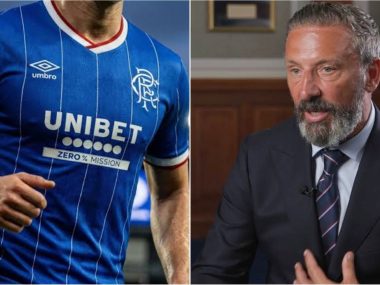
Rangers supporters are still struggling to understand how Hibernian were awarded a controversial penalty at Ibrox, with the decision becoming one of the biggest talking points to emerge from Derek McInnes’ difficult start to life in charge.
The incident came at a particularly damaging moment for the Gers.
Rangers were desperately looking for their first Scottish Premiership victory of the campaign, but instead found themselves behind after a VAR intervention resulted in a penalty being awarded to David Gray’s side.
Josh Campbell made no mistake from the spot, leaving Rangers facing another uphill battle.
Although the Light Blues eventually found an equaliser, the damage had already been done.
Hibs would go on to score a dramatic late winner, securing a 2-1 victory and leaving McInnes’ team still searching for their first league win.
But long after the final whistle, attention continued to return to the penalty.
Why was VAR involved in the first place?
And what exactly happened before Don Robertson was sent to the pitch-side monitor?
Those are the questions that have continued to fuel the anger among the Rangers support.
The incident that changed the game
The controversial moment involved Rangers midfielder Vanja Dragojevic and Hibs defender Jason Kerr inside the penalty area.
As a cross entered the box, the pair became involved in a physical tussle.
Initially, there appeared to be little reaction to the incident.
There was no obvious immediate appeal from the Hibs players, and the situation looked like the type of grappling that can occur repeatedly during set pieces.
That, however, was not the end of the matter.
VAR became involved and Robertson was eventually instructed to review the incident at the pitch-side monitor.
After watching the footage, the referee decided that Dragojevic had committed a foul.
A penalty was awarded.
Campbell stepped forward and calmly converted.
For Rangers supporters, that was where the frustration really began.
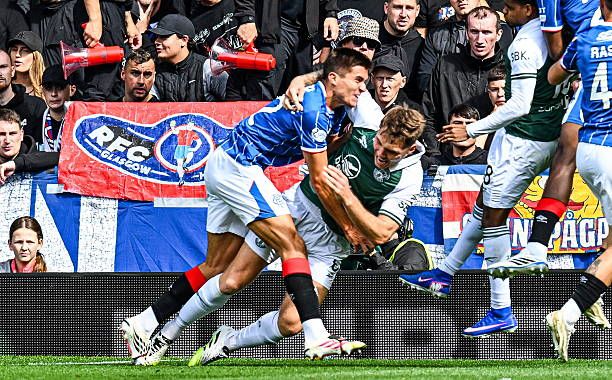
Because the footage appeared to show both players involved in the physical contact.
Pundits immediately questioned the decision
The controversy was not limited to the stands.
Several former players and pundits subsequently questioned whether the incident had been sufficient to justify a penalty.
Alan Hutton described the decision as “soft”, while Tony Docherty similarly felt the VAR intervention was overly pedantic.
Hutton acknowledged that Dragojevic was looking at Kerr rather than the ball, but still questioned whether there was enough contact to justify the decision.
Docherty’s assessment was equally damning, pointing out that Kerr also had his hands on the Rangers player.
Former Rangers midfielder Andy Halliday went further, warning that he hoped the incident would not become the standard for penalties from corners throughout the season.
Scott Brown also criticised Dragojevic’s defending but ultimately concluded that the contact did not warrant a penalty.
That is what has made the incident so contentious.
It is not simply a case of Rangers supporters disagreeing with a referee.
There has been genuine debate over whether the threshold for VAR intervention was met.
So where does Matthew McDermid come into this?
This is where the story becomes particularly interesting.
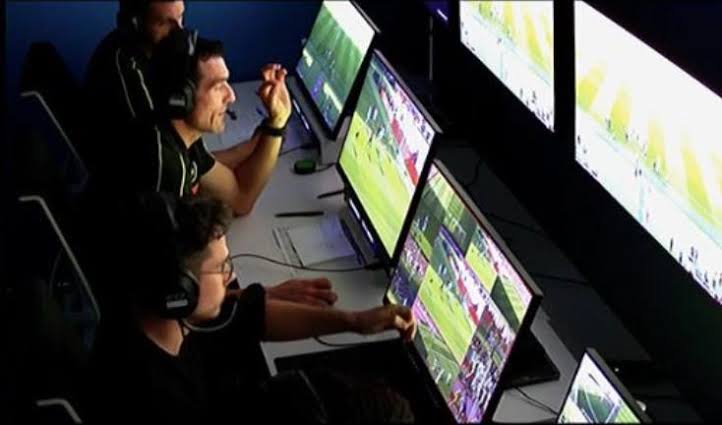
Rangers supporters have increasingly turned their attention towards the VAR process itself rather than simply Don Robertson’s final decision.
The key distinction is important.
The on-field referee is the official who ultimately awards the penalty. VAR does not simply replace the referee’s decision.
Instead, the VAR team reviews incidents and can recommend an on-field review when it believes there has been a clear and obvious error, depending on the circumstances.
That means the crucial question surrounding the Ibrox incident is not simply:
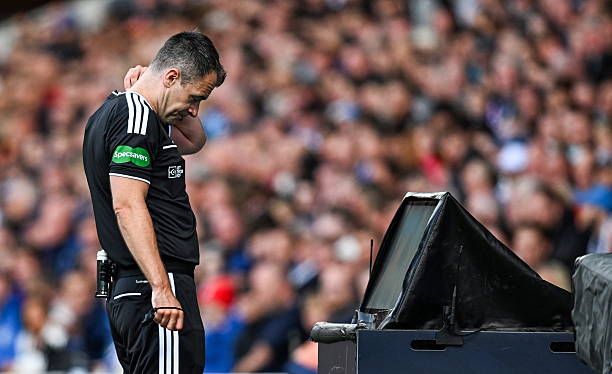
“Why did Robertson give the penalty?”
It is:
“Why was Robertson asked to look again in the first place?”
That is the part of the process that Rangers supporters want explained.
There has been no credible evidence uncovered, however, showing that McDermid privately instructed Robertson to award a penalty or that an undisclosed conversation took place in the VAR room.
Claims of a “leaked” instruction should therefore be treated with caution.
What is known is that the VAR process led to Robertson reviewing the incident, after which he changed the on-field outcome and awarded Hibs a penalty.
Why Rangers fans believe VAR should face greater scrutiny
The frustration at Ibrox is understandable from a football perspective.
Rangers were already struggling to find consistency under McInnes, and conceding an early penalty put them immediately under pressure.
The Gers eventually fought their way back into the contest, only to lose in stoppage time.
That makes the original decision feel even more significant to supporters.
Had Rangers won, the penalty would probably have been remembered as one controversial moment in a difficult match.
Instead, Hibs left Ibrox with all three points.
And Rangers were left wondering what might have happened if the penalty had never been awarded.
The SFA review could be the next major development
Rather than relying on social-media claims or supposed leaks, the most meaningful development would be an official assessment of the incident.
The Scottish FA has previously used its Key Match Incident review process to examine VAR interventions.
That process has demonstrated that VAR decisions can subsequently be judged incorrect.
For example, a Scottish FA review panel previously concluded that a VAR intervention leading to a Dundee United penalty against Hibernian was wrong, with three of five panel members believing the intervention did not meet the required threshold.
That precedent explains why Rangers supporters are demanding greater scrutiny of controversial interventions.
The debate is not whether referees can make mistakes.
They obviously can.
The real issue is whether VAR should intervene when an incident is sufficiently ambiguous that reasonable observers can reach completely different conclusions.
Rangers cannot afford another controversy to overshadow their problems
There is also an uncomfortable truth for McInnes.
Even if Rangers ultimately feel the penalty decision was wrong, they cannot allow the controversy to disguise the wider problems within the team.
The defeat left Rangers still searching for their first league victory, while McInnes has already acknowledged the need for further recruitment.
The manager needs more attacking quality, greater defensive stability and, above all, results.
That means the Rangers boss cannot afford to spend too much time looking backwards.
But neither should the VAR process escape scrutiny simply because Rangers have other problems.
The Ibrox penalty has raised legitimate questions about the intervention, the threshold for sending Robertson to the monitor and whether the final decision was the correct interpretation of the footage.
For now, there is no verified evidence of a secret or leaked instruction from Matthew McDermid.
What Rangers fans do have is the footage, the VAR intervention, Robertson’s eventual decision and a growing list of pundits who questioned whether the penalty should ever have been awarded.
And that is why the controversy is unlikely to disappear anytime soon.

 Nafisa