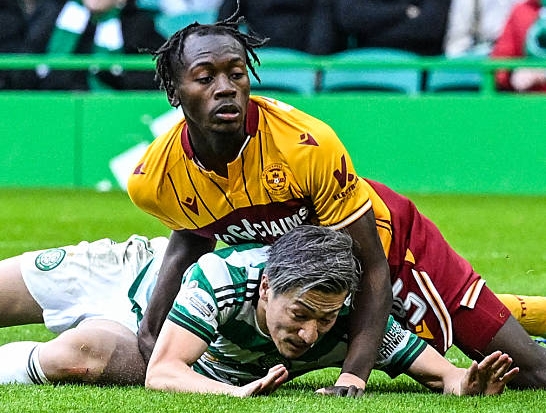
The debate surrounding Celtic’s controversial penalty against Motherwell has taken another twist after the Scottish FA released an explanation for the decision that changed the game.
During the second half at Celtic Park, the match between Celtic and Motherwell was finely balanced before a VAR review awarded the home side a penalty and sent off defender Emmanuel Longelo.
The incident immediately divided opinion among fans and pundits. Many initially believed the contact was minimal and questioned whether the situation truly warranted a spot kick.
Now, the governing body has clarified exactly why the decision was made.
What the VAR team focused on
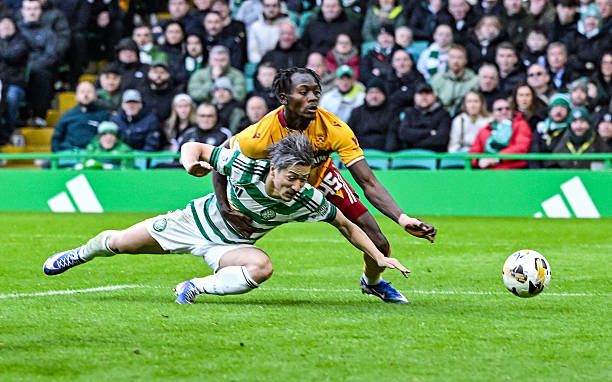
According to the explanation released by the Scottish Football Association, the key factor was not the fall itself but the holding action that occurred before the ball reached the players.
As a corner was delivered into the box, Daizen Maeda attempted to attack the ball at the back post. Replays showed Longelo wrapping his arms around the Celtic forward and preventing him from making a clean movement toward the cross.
Referee John Beaton initially missed the offence in real time and awarded a free-kick to Motherwell.
However, VAR official Kevin Clancy reviewed the footage and recommended an on-field review.
Once Beaton examined the replays at the pitchside monitor, the decision was overturned.
Why the red card was also given
The Scottish FA explained that the holding offence was judged to have denied a clear goalscoring opportunity.
Because the foul occurred inside the penalty area while the ball was arriving in a dangerous position, the officials determined that Maeda had been prevented from making a genuine attempt to score.
Under the laws of the game, that combination — a clear holding offence inside the box that stops a player from challenging for the ball — results in both a penalty and a dismissal.
That interpretation is what led to the red card for Longelo alongside the spot kick for Celtic.
Why many fans were surprised
The confusion largely came from the fact that Maeda appeared to go down quickly, leading some observers to focus on whether the fall itself was exaggerated.
But the officials’ explanation makes it clear that the decision had little to do with the fall and everything to do with the defender’s arms around the forward before the ball arrived.
Once VAR isolated that moment, the refereeing team considered the infringement significant enough to intervene.
A decisive moment in the match
After the review, Celtic converted the penalty and went on to win the match 3–1.
The call ultimately proved to be the turning point in the game — and the Scottish FA’s explanation has now shed light on why officials felt confident enough to reverse the original decision.
Even with the clarification, the incident is likely to remain a talking point among supporters for some time.