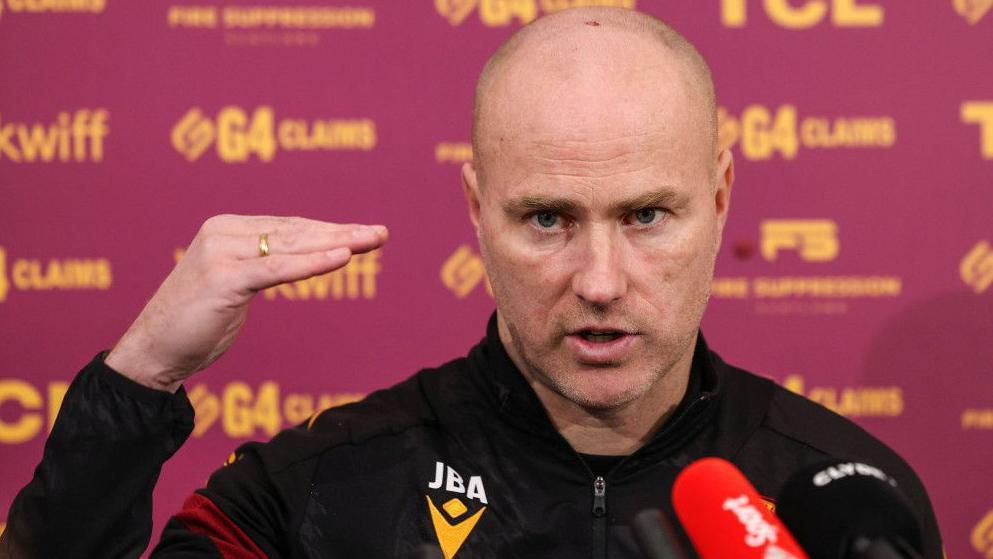
Motherwell boss Jens Berthel Askou has pointed to one decisive Celtic moment that he believes completely changed the game in his side’s 3-1 defeat at Celtic Park and surprisingly, it wasn’t goalscorers Yang Hyun-jun or Tomas Cvancara.
Instead, the Steelmen manager believes Daizen Maeda’s crucial involvement in the penalty incident proved to be the turning point that ultimately swung the match in Celtic’s favour.
For large parts of the contest, Motherwell had matched the Scottish champions stride for stride. After taking the lead through Elijah Just, Askou’s side were well organised, pressing aggressively and frustrating the Hoops.
Even after Celtic equalised, the game remained finely balanced heading into the second half.
But everything changed in a single moment inside the Motherwell penalty area.
As a corner was delivered into the box, Maeda attacked the back post and found himself grappling with defender Emmanuel Longelo. The Japanese forward went down under pressure as he tried to reach the ball.
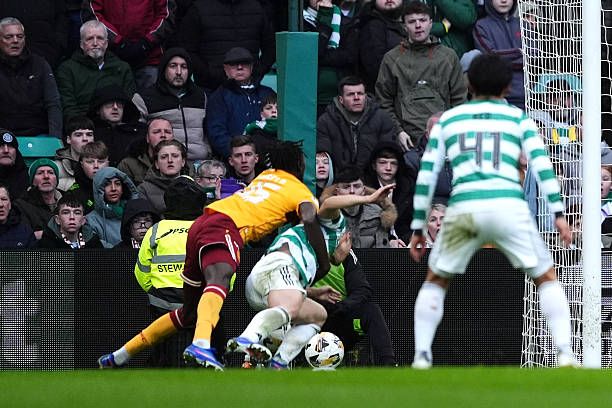
Referee John Beaton initially waved play on and awarded a goal kick, with Celtic players protesting immediately.
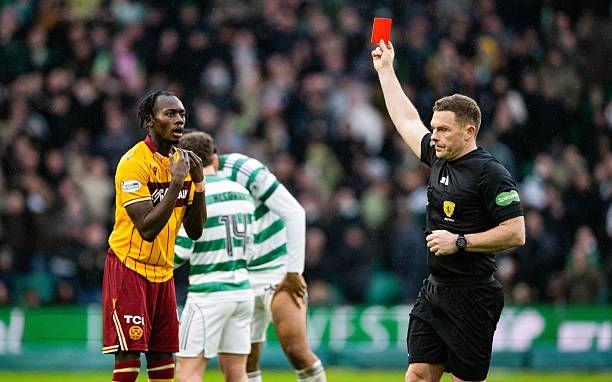
However, VAR intervened and instructed Beaton to review the incident on the pitchside monitor. After studying the replays, the referee overturned his decision — awarding Celtic a penalty while also sending Longelo off for denying a clear goalscoring opportunity.
In the blink of an eye, the entire complexion of the game changed.
Tomas Cvancara stepped up and calmly slotted the penalty past the goalkeeper to give Celtic the lead, while Motherwell were suddenly left to battle the remainder of the match with ten men.
From that moment on, the task became almost impossible for Askou’s side.
Speaking after the match, the Motherwell boss admitted the incident was a massive blow for his team and acknowledged how costly the moment proved.
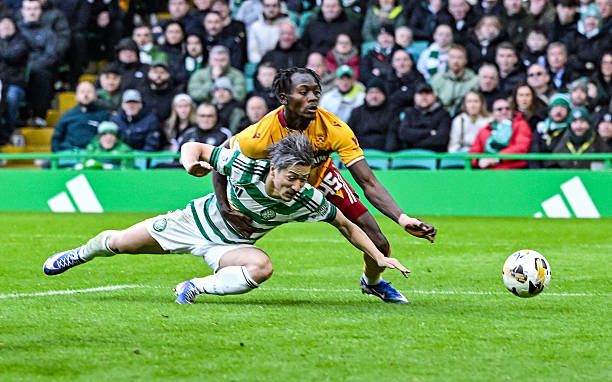
“You can argue that Manny is holding him a little bit too long. Maeda’s also trying, they’re wrestling,” Askou said.
“You see that situation a million times. Obviously, often the ball doesn’t end there. If the ball hadn’t gone there, it would never have turned into a penalty.”
The Danish manager accepted that the referee had a case for awarding the foul but admitted the consequences were devastating for Motherwell.
“There’s an opportunity for the referee to argue that there’s a holding offence. And that’s hard to argue against. I know Manny is gutted right now that he didn’t control that situation better than he did.”
More painful for the visitors was the double punishment — the penalty and the red card — which Askou believes left his side with an almost impossible challenge.
“And then obviously we get the double punishment with the red card, which gave us a mountain to climb at that point, because we were actually, I think, in very good control of the game there, ready to really accelerate and push for the last 20-25 minutes to get the win.”
With the advantage of both a goal and an extra player, Celtic took control of proceedings and eventually sealed the win with another goal from Yang Hyun-jun late in the match.
But while Yang and Cvancara will grab the headlines for their goals, Askou’s comments make it clear that, from Motherwell’s perspective, the moment that truly decided the match came earlier — when Daizen Maeda’s relentless attacking run forced the error that changed everything.
Without that single moment, the outcome of the game could have looked very different.