
Celtic were moments away from tumbling out of the Scottish Cup against Dundee, and although a late resurgence spared them humiliation, the contest might have unfolded very differently had a first-half penalty been awarded.
One incident in particular took centre stage in the debate at half-time and well beyond the final whistle. Celtic forward Tomáš Čvančara had appeals for a spot-kick dismissed following a robust clash with Luke Graham as he tried to surge into the area.
Čvančara seemed to be nudged while advancing towards goal, eventually going to ground just inside the penalty box. Referee Ryan Lee pointed for a free kick outside the area, triggering an instant VAR review amid strong protests from the home crowd.
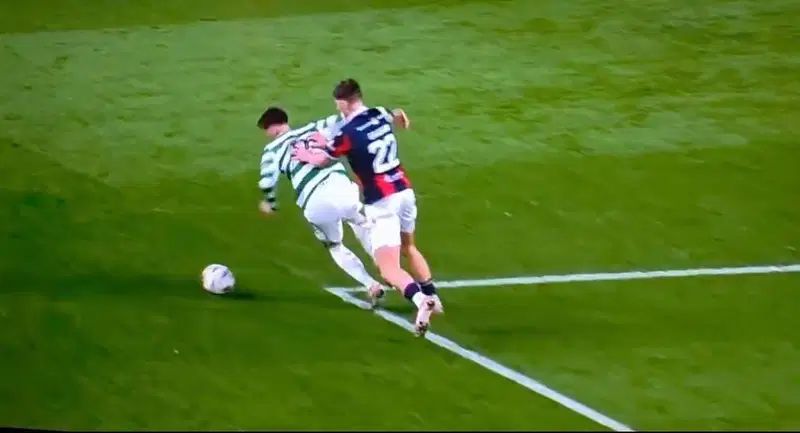
The game was paused briefly as VAR official David Dickinson assessed the moment, but play quickly restarted with the original decision standing. No penalty was awarded.
Further clarification arrived via the broadcast, with the Scottish Football Association explaining the logic behind the ruling. Speaking on Premier Sports, host Emma Dodds delivered the explanation.
She said: “In the 38th minute, a free kick is correctly awarded outside the penalty area because the pushing began outside and continued inside. However, it can only be punished if it is holding that continues inside. Pushing can only be punished at the initial point of contact.”
In essence, although the contact extended into the box, SFA guidelines indicate that pushing is evaluated at the moment it starts. Since that first contact happened outside the area, officials concluded that a free kick — rather than a penalty — was the appropriate verdict.
It is a call unlikely to satisfy aggrieved Celtic supporters, especially considering how narrowly the holders avoided being knocked out. Yet under the existing VAR framework and its interpretation, officials maintain that the laws of the game were enforced as written.