Celtic battled their way to a hard-earned 3–1 victory over a well-coached Motherwell side at Celtic Park, but the match produced far more drama than the final scoreline suggests.
The Steelmen arrived in Glasgow with a clear plan and once again showed why many neutrals consider them one of the most entertaining teams in Scottish football this season. In a league often criticised for direct, physical football and defensive tactics when visiting Celtic Park or Ibrox, Motherwell’s approach was refreshingly brave.
They pressed aggressively, moved the ball confidently and, for long spells of the match, made life extremely difficult for the home side.
Celtic, however, showed the resilience that title-challenging teams need.

Coming from behind in a tense and high-pressure game highlighted not only the quality within the squad but also the mentality that has kept the Hoops firmly in the Premiership title race.
Yet for many supporters, the match was not just about the two teams on the pitch.
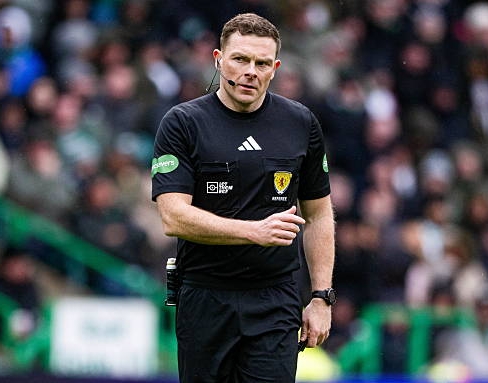
Attention once again turned to referee John Beaton, a figure who has long been a controversial name among Celtic supporters. The official, often referred to by fans as “cheatin’ Beaton”, has been involved in several contentious decisions in Celtic matches over the years, and this game only added fuel to that debate.
The issue, many supporters argue, goes deeper than individual calls.
Beaton is widely known to have been a lifelong supporter of Rangers earlier in his life — something that continues to spark discussion whenever he is appointed to officiate matches involving either side of the Glasgow rivalry.
Questions about referee appointments in Scotland have been raised many times before. Why, critics ask, are officials with perceived allegiances to certain clubs allowed to take charge of key title-race matches? And why do so many referees come from the same regions when clubs from all over the country are competing?
Those debates will likely continue elsewhere.
What mattered on the day was the sequence of decisions during the match itself — several of which frustrated the Celtic support.
One moment that particularly irritated fans involved Reo Hatate. The midfielder was booked after pointing out where a free kick should have been taken from — a decision that many inside Celtic Park found baffling, especially as Hatate appeared to be correct about the location of the foul.
There were other moments too.
Anthony Ralston received a yellow card despite appearing to clearly win the ball in a challenge shortly after coming on as a substitute, another decision that drew loud protests from the stands.
But the biggest flashpoint of the afternoon arrived in the second half — a moment that ultimately changed the course of the match.
From a Celtic corner, the ball drifted toward the back post where Daizen Maeda had found space and looked set to head into an empty net from close range. As the Japanese forward prepared to attack the ball, Motherwell defender Emmanuel Longelo wrapped his arms around him and dragged him to the ground.
Despite having what many believed was the clearest view of anyone on the pitch, Beaton waved play on and awarded a goal kick.
The reaction inside Celtic Park was immediate.
Players, supporters and even neutrals watching the match appeared convinced it was a foul — one that denied a clear goalscoring opportunity.
Thankfully for Celtic, VAR official Kevin Clancy intervened and asked Beaton to review the incident on the pitchside monitor.
After studying the footage, the referee overturned his original decision. A penalty was awarded and Longelo was shown a red card for denying a goalscoring opportunity.
The decision completely changed the game.
Tomas Cvancara stepped forward and, just as he had done in a high-pressure moment at Ibrox the previous week, calmly converted the penalty to give Celtic the lead.
With Motherwell now reduced to ten men, Celtic took control of the match. Yang Hyun-jun later added another goal to seal the victory and ensure the Hoops collected three crucial points.
In the end, the penalty itself was not the controversial part.
What had many people talking was the fact that the foul was initially missed despite appearing obvious to most inside the stadium. Without the intervention of VAR, Celtic may well have been denied a crucial moment in a game that could have had major implications in the title race.
Despite the controversy surrounding the officiating, the match itself was an entertaining and high-quality contest — one that showcased the intensity, drama and unpredictability that make the Scottish Premiership so compelling.