 Nafisa
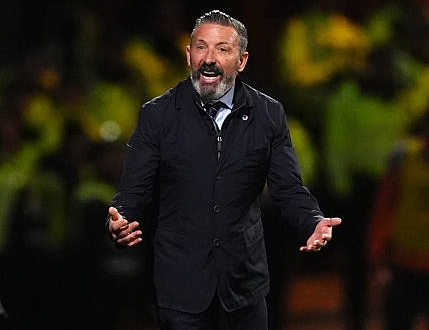
Rangers had the opportunity to make a major statement in the Scottish Premiership title race on Saturday night, but what should have been a memorable away victory quickly turned into another frustrating evening for Derek McInnes and his players.
The Light Blues travelled to Dens Park looking to extend their impressive winning run to eight matches, knowing that three points would take them above Celtic and into top spot ahead of their rivals’ crunch meeting with Hearts on Sunday.
For a while, it appeared Rangers were going to deliver exactly what their supporters wanted. Despite falling behind to Bradley Fink’s opener, the visitors responded through Badredine Bouanani before Nicolas Raskin produced a stunning long-range strike to put them 2–1 ahead.
However, Rangers failed to protect their advantage, allowing Dundee back into the contest when Callum Jones punished a costly mistake in the second half.
The 2–2 draw means Rangers remain second in the Premiership, one point behind Celtic, who have the opportunity to extend their advantage when they host Hearts.
And while Dundee deserve credit for refusing to give up after losing their lead, one Rangers player will know that his contribution to the decisive moment has left his team facing some uncomfortable questions.
Dan Neil was the man at the centre of the controversy after his error allowed Jones to restore parity in the 69th minute.
The Rangers captain had already played a positive role in the match, providing the assist for Raskin’s goal that briefly put the visitors in control. But his costly loss of possession ultimately overshadowed that contribution, handing Dundee the opportunity they needed to rescue a point.
Neil was caught dwelling on the ball, allowing Jones to nick possession before finishing to make it 2–2. With Rangers having worked hard to overturn Dundee’s first-half advantage, the timing of the mistake made it particularly damaging.

The midfielder had helped put his team in a position to win the match, only for his subsequent error to undo much of that work.
It was the sort of moment that can define a result, especially when the margins are tight and the rewards for victory are significant. Rangers were less than half an hour away from securing another three points, but Dundee seized their opportunity and ensured the visitors left empty-handed in terms of their ambitions for the evening.
Neil should not be judged solely on one incident, particularly given his involvement in Raskin’s goal. Nevertheless, the mistake was undeniably costly, and Rangers will look back at the equaliser as a major reason they failed to take maximum points.
The frustration will be even greater because the visitors had produced two outstanding goals to put themselves in front.
Dundee initially took the lead in the 37th minute when Fink capitalised after Rangers failed to deal with a long ball. Bouanani responded five minutes later, cutting inside and curling an excellent effort into the net to restore parity before the break.
Raskin then gave Rangers the advantage on the hour mark with a superb strike from distance that went in off the underside of the crossbar.
At that stage, McInnes’ side appeared to have completed the difficult part of the job. They had recovered from a setback, taken control of the scoreline and put themselves within touching distance of another victory.
Instead, Jones’ equaliser exposed Rangers’ inability to see the game out.
Dundee also deserve recognition for their resilience. They could have been discouraged after watching Rangers turn the match around, but Steven Pressley’s players continued to compete and took advantage when the opportunity presented itself.
For Rangers, however, the bigger picture is difficult to ignore.
The club entered the match on the back of seven consecutive victories, giving them an excellent chance to apply pressure on Celtic before Sunday’s showdown with Hearts. A win would have taken the Light Blues to the top of the table, at least temporarily, and strengthened the sense that McInnes’ side were building genuine momentum.
Instead, the dropped points leave them one behind their Glasgow rivals, who can increase that gap with victory over Hearts.
The timing is especially frustrating because McInnes had played down suggestions that Rangers should focus too heavily on Celtic’s position before the Dundee fixture. His message was that his team simply needed to win its own matches.
Unfortunately for the Rangers boss, his side failed to do that when the opportunity was there.
The result does not erase the progress made during their winning run, nor does it mean Neil alone was responsible for every aspect of the draw. Rangers had already conceded once and struggled to turn their superiority into a decisive advantage.
But the midfielder’s mistake was the defining moment in the second half, and it has given supporters an obvious reason to question how the team allowed a winning position to slip away.
Now Rangers must regroup and hope Celtic fail to capitalise on their opportunity against Hearts.
For McInnes, the challenge is ensuring that one frustrating result does not derail the momentum his team had worked so hard to establish. For Neil, the best response will be on the pitch, where he will have to demonstrate that the costly lapse at Dens Park was an isolated mistake rather than a recurring problem.
Rangers had the chance to seize top spot and put the pressure on Celtic. Instead, they left Dundee with a point, a missed opportunity and a moment of individual error that could prove significant in an increasingly competitive title race.

 Nafisa