 Nafisa
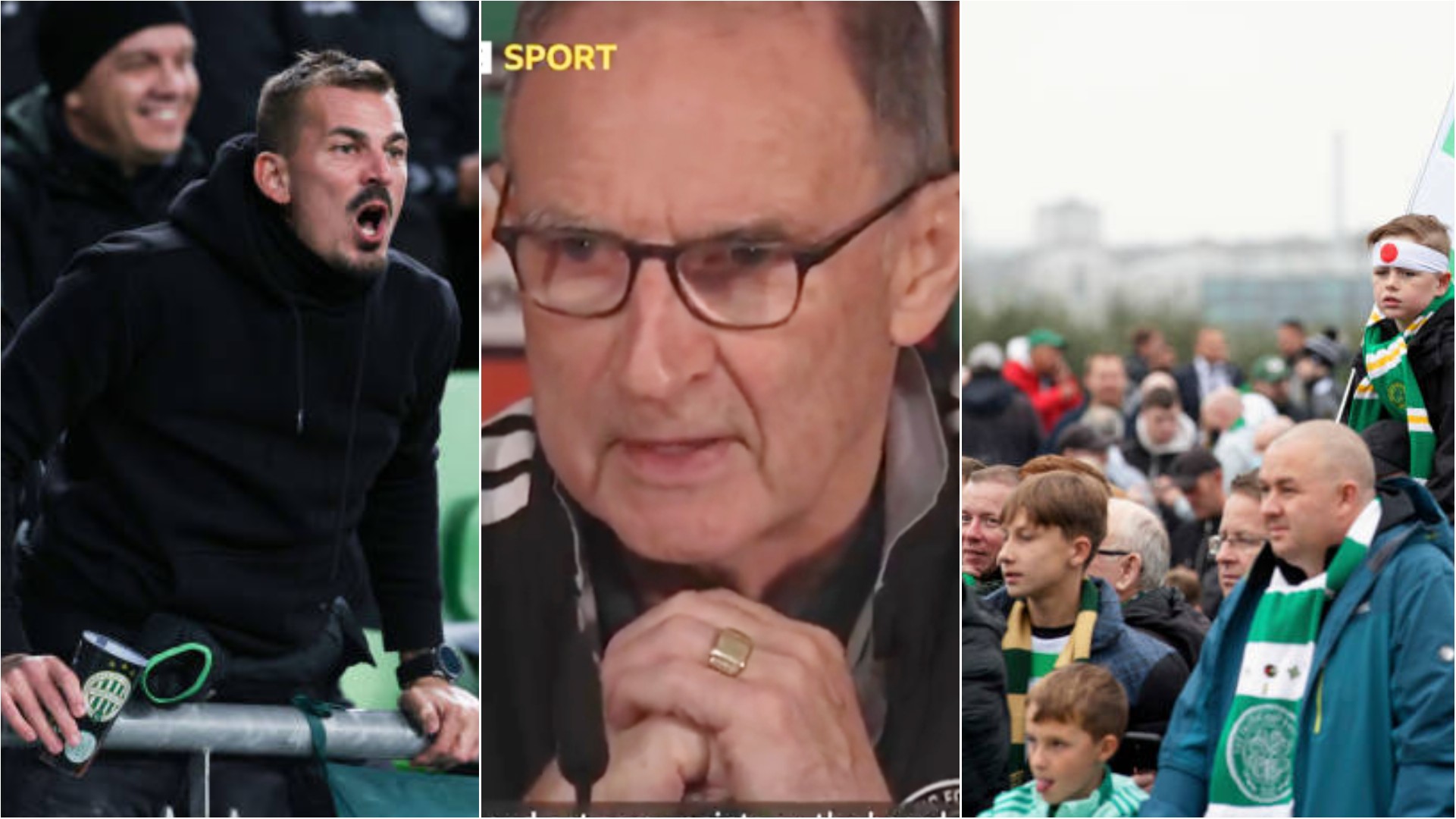
Martin O’Neill has responded to the Celtic supporters who booed and criticised his team following Thursday night’s 3-1 Europa League defeat to Ferencváros, insisting that the reaction from the Parkhead crowd was nothing new to him.
The Celtic manager was asked directly about the boos that greeted his players at both half-time and full-time, with supporters making their frustration clear after another disappointing performance.
It was the second consecutive defeat for O’Neill’s side following the 3-0 Old Firm humiliation against Rangers at Ibrox, and the mood inside Celtic Park was understandably tense.
But rather than appearing surprised by the reaction, O’Neill pointed back to his first spell at the club more than two decades ago and suggested he already knows exactly how passionate Celtic supporters can react when performances fall below expectations.
O’Neill responds to Celtic boos
Asked how much he would need the Celtic supporters following the latest defeat, O’Neill made it clear that he understands why they were unhappy.
“You know, I’ve been here 25 years ago where the crowd can react like that there. So it’s genuinely nothing new to me at the end of it all.
“I think that they were showing a lot of frustration as well too.”
The response came after another difficult night for Celtic.
The Hoops had hoped to bounce back from their heavy defeat at Ibrox, but instead found themselves behind against Ferencváros before Mika Baur briefly restored parity.
Kristoffer Zachariassen then restored the visitors’ lead in first-half stoppage time, before Daniel Arzani struck shortly after the restart to put Ferencváros 3-1 ahead.
Celtic could not find a way back.
The result left the home support furious, with the boos at half-time and again at the final whistle underlining just how quickly the atmosphere has changed.
O’Neill points to Celtic’s attacking problems
However, the Celtic manager believes the frustration from the stands was also connected to something he had already identified during his post-match analysis.
O’Neill was particularly unhappy with the way his players handled possession when they appeared to have opportunities to move forward.
“At times when we had the ball, we looked as if we were going forward, the next thing you know, we put two passes backwards.
“So those things definitely frustrate you. And that’s something we’ll have to try and iron out.”
That admission is significant because O’Neill had already criticised Celtic’s lack of urgency after the defeat.
The manager said his players needed to move forward more quickly and take greater risks when openings appeared rather than allowing opponents to recover their defensive shape.
Against Ferencváros, that problem was repeatedly visible.
Celtic would progress into promising areas before slowing the move down, passing backwards and giving the visitors time to reorganise.
It was the kind of football that naturally tested the patience of the Parkhead crowd.
And O’Neill knows it cannot continue.
The unity message is now being tested
The question about the supporters also carried additional significance because O’Neill spoke extensively about unity when he returned to Celtic.
His relationship with the Parkhead crowd was initially built on enormous goodwill because of what he achieved during his first spell in charge.
But football can change quickly.
Two defeats in four days have now created a completely different atmosphere, with Celtic suffering a 3-0 defeat to Rangers before losing 3-1 at home to Ferencváros.
O’Neill’s response suggests he is not going to complain about supporters expressing their frustration.
Instead, he appears to recognise that the team has given them reasons to be unhappy.
His reference to his first spell at Celtic also shows that he has experienced this side of the club before.
The Celtic support expects intensity, attacking football and a team willing to fight for every ball. When those qualities disappear, the reaction can be immediate.
Rangers now arrive at Parkhead
The timing makes O’Neill’s situation even more intriguing.
Celtic do not have weeks to work on the issues he has identified.
Rangers return to Parkhead on Sunday — only seven days after their 3-0 victory at Ibrox.
O’Neill has already admitted that Celtic need more urgency and must be prepared to take greater risks in possession.
He has now acknowledged that the supporters are frustrated by the same issues.
That leaves the manager with one obvious challenge: make the changes quickly enough for the team to give the Parkhead crowd something to believe in again.
The boos were not unexpected for O’Neill.
But if Celtic produce another performance like the ones against Rangers and Ferencváros, the frustration around the club is unlikely to disappear.
For now, O’Neill has accepted the reaction from the supporters.
The real response has to come from his players on Sunday.


 Nafisa