 Nafisa
There are defeats in an Old Firm clash that can be explained away. A bad decision, an unfortunate deflection, a moment of individual brilliance or even a game that simply gets away from you.
Then there are performances that force a club to look much deeper.
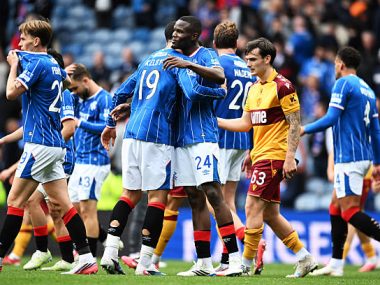
For Celtic, Sunday’s 3-0 defeat to Rangers at Ibrox belonged firmly in the second category.
The Scottish champions were not simply beaten by their fiercest rivals. They were outplayed for long spells, struggled to establish control in midfield and repeatedly gave the ball away in situations that allowed Rangers to attack with purpose.
By the time Dan Neil’s second goal completed the rout, Celtic had been left staring at a result that sent them crashing out of the Premier Sports Cup and raised uncomfortable questions about where Martin O’Neill’s side currently stand.
O’Neill himself acknowledged afterwards that Celtic have structural issues to address.
And now the captain has delivered perhaps the clearest assessment of all.
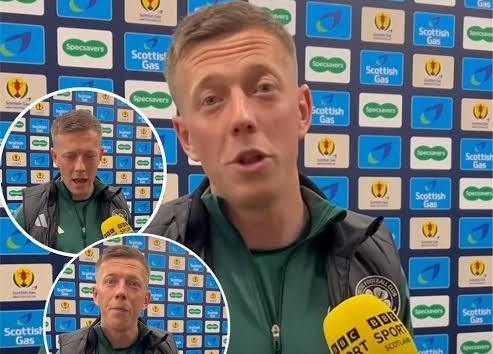
Callum McGregor did not attempt to disguise the scale of Celtic’s shortcomings. Instead, he admitted that Rangers looked like a functioning team while Celtic looked like a collection of individuals.
That assessment is particularly significant coming from a player who has experienced countless Old Firm battles and knows exactly what is required to compete at Ibrox.
McGregor admits Celtic never recovered after Rangers took the lead
The Celtic skipper admitted that once Rangers went ahead, his side never looked capable of turning the match around.
“Once we went behind in the game we never looked like recovering to be honest,” McGregor told the BBC.
That was not to say Celtic had no opportunities before Rangers opened the scoring.
McGregor pointed to moments early in the contest which, had Celtic taken advantage of them, could have changed the complexion of the afternoon.
“We had a couple of good moments early on if we take them it’s a different game. And we know that coming here you’re not going to get hundreds and hundreds of chances. You get moments in the game where if you take them it can totally change the outlook of the game.
“I felt like once we went one behind we never really looked like getting back in it, to be honest.”
But the problems went considerably deeper than simply failing to take chances.
Celtic’s inability to maintain possession became one of the defining features of the afternoon. Rather than using the ball to take the sting out of Rangers’ attacks, they repeatedly surrendered possession and gave the hosts exactly the sort of opportunities they wanted.
That was something McGregor admitted was particularly difficult to accept.
Celtic captain delivers damning verdict on performance
Asked whether the quality of Celtic’s passing had surprised him, McGregor was remarkably critical.
“Technically it did. You come here and if you want to impose yourself you’ve got to be good on the ball and we never quite did that.
“To be honest it wasn’t under massive pressure either, it was quite careless and slack. When you think we have half a foot in the game we keep turning the ball over and it’s a counter-attack which is what they want and are good at.”
It was a damning description of Celtic’s performance.
Rangers did not need to manufacture openings through sustained pressure every time. Celtic’s own mistakes repeatedly presented them with opportunities to attack spaces in transition.
For a side travelling to Ibrox in a major cup tie, that lack of security in possession proved costly.
McGregor also admitted that the defeat ranked among the toughest experiences he has had on the pitch, largely because Celtic failed to resemble the side they believe themselves to be.
“Was it one of the toughest times I’ve had out there? Yeah because it wasn’t us. I think the difference between the two sides was you seen the team and you seen a team of individuals as well.
“Rangers were a team and you could see that. We looked like a team of individuals who wanted to do our own thing and play when we got the ball, not necessarily run when you don’t. That’s what you can’t do when you come here, you’ve got to run. You can’t defend with six players, it’s impossible.”
That particular assessment cuts straight to the heart of the issue.
McGregor demands an immediate Celtic response
The Celtic captain knows there is little value in simply dwelling on what went wrong at Ibrox.
The bigger concern is whether the players can respond quickly enough.
“We’re trying to get the message to everyone that we need to be a team, to be the team we want to be. And we need to find a way to do that quickly because we lost a big game in LASK and another one today. It’s not acceptable.
“There will be other big games in the season and eventually you have to win one if you want to be considered a good team. We’ve put ourselves under pressure and we need to respond on Thursday and then on Sunday and we quickly need to get to the level.”
The reference to LASK underlines the wider frustration.
For Celtic, this was not being treated as an isolated bad afternoon. The defeat has arrived alongside another disappointing result in a major fixture, increasing the pressure on the players to demonstrate that they can perform when the stakes rise.
McGregor was also unwilling to hide from the criticism that is inevitably going to follow.
“I’m not going to shy away from that because everyone’s going to be talking about it, let’s be fair. So if we want to be a good Celtic team we have to win the big games, that’s one thing we’ve always done is win big games and turned up when it mattered.
“So far this season we’ve been bitty in games and we need to fix it.”
That final admission may ultimately prove to be the most important part of McGregor’s assessment.
Celtic now have a clear problem to solve. It is not merely about recovering from one Old Firm defeat or correcting a few sloppy passes. Their captain believes they must rediscover the collective identity that has traditionally allowed them to thrive in major matches.
Rangers showed exactly what Celtic lacked at Ibrox: cohesion, intensity and a willingness to work for one another without the ball.
For McGregor, there is no hiding from that reality.
The challenge now is whether Celtic can turn his brutally honest assessment into an immediate response.
Because after being dismantled by Rangers, simply talking about becoming a team will not be enough. Celtic need to start looking like one.

 Nafisa