 Nafisa
It was a night that started with genuine hope at Ibrox.
Rangers knew exactly what was required.
After suffering a 2-1 defeat to Jagiellonia Bialystok in the first leg, Derek McInnes’ side needed to overturn the deficit in Glasgow and keep their Europa League campaign alive.
For long periods, everything appeared to be falling into place.
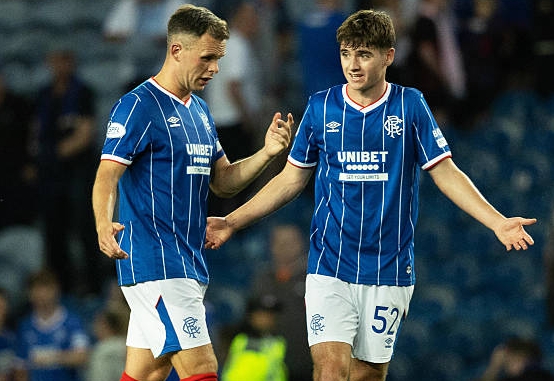
The atmosphere was positive, Rangers looked aggressive and Daisuke Yokota was causing problems for the visitors.
Then came one decision that completely changed the complexion of the contest.
And by the end of the night, Rangers were left wondering how a promising first half had turned into another European disappointment.
Rangers make the perfect start
The hosts began with real intent and looked determined to put Jagiellonia under immediate pressure.
Yokota was one of the biggest threats, repeatedly finding pockets of space and creating problems for the Polish side.
Rangers eventually got their reward when they were awarded a penalty.
Lawrence Shankland stepped up and made no mistake from the spot, blasting the ball beyond the goalkeeper to level the aggregate score at 2-2.
Suddenly, Rangers had the momentum.
They had the home crowd behind them and were playing with the kind of purpose that suggested a second goal could follow.
But despite the promising opening 45 minutes, McInnes made a significant alteration during the interval.
And it proved disastrous.
The change that transformed the game
McInnes decided to remove Thelo Aasgaard at half-time, replacing him with Ross McCrorie.
More importantly, Rangers changed their shape.
The 3-5-2 system used in the opening period was abandoned in favour of a 4-4-2.
On paper, the change may have appeared logical.
In reality, it completely disrupted Rangers.
The team that had controlled the first half suddenly looked far less threatening after the restart.
Jagiellonia began finding more space, Rangers struggled to maintain the same attacking pressure and the visitors gradually grew into the contest.
Former Rangers striker Steven Thompson was particularly critical of the tactical switch.
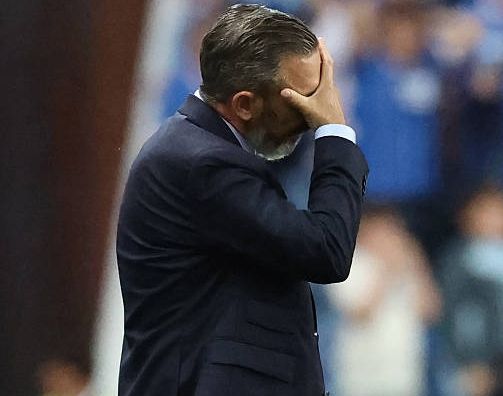
Speaking on BBC Sportsound, he could barely hide his disbelief.
“It’s incredible really when you think about it.
“In the first half Rangers had control of the game. They were creating opportunities and looking dangerous. In the second half, with the formation change, they’ve not looked the same team.
“There is absolutely no two ways about that.”
It was difficult to argue with the former striker’s assessment.
Rangers had looked like a side capable of turning the tie around.
Then they changed something that did not appear to need fixing.
Jagiellonia punish Rangers
The warning signs began appearing before the decisive moment.
Jagiellonia started to enjoy more possession and Rangers struggled to recreate the intensity that had characterised the opening half.
Eventually, the pressure told.
The visitors found the breakthrough when Nik Prelec headed home to make it 1-1 on the night.
That goal completely changed the equation.
Rangers now needed another goal simply to force extra time.
Instead of pushing on with confidence, however, the home side appeared increasingly desperate.
McInnes threw more attacking options onto the pitch, but Rangers could not find the goal they needed.
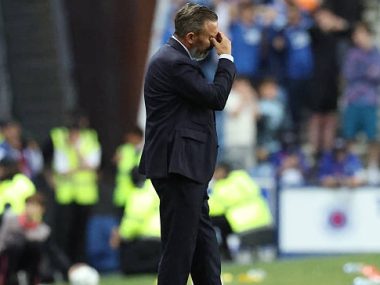
The final whistle confirmed the painful reality.
A 1-1 draw meant Jagiellonia progressed 3-2 on aggregate.
Rangers were out of the Europa League.
Rangers now drop into the Conference League
The elimination is another blow for McInnes, who is still waiting for his Rangers team to find consistency.
However, there is at least one potential positive to take from the situation.
Rangers will now enter the Europa Conference League play-off round rather than being completely eliminated from European competition.
It is obviously not where the club expected to be.
Rangers are a club with ambitions of competing much higher up the European ladder.
But given their current situation, the Conference League could provide McInnes with an opportunity to rebuild confidence.
Could Conference League football actually help Rangers?
There is an argument that the drop into the third-tier European competition could ultimately benefit Rangers domestically.
The Conference League group stage involves fewer league-phase matches than the Europa League, meaning Rangers would potentially have fewer European fixtures to contend with.
The quality of opposition is also generally lower.
That could give McInnes a better opportunity to rotate his squad and protect key players, particularly during busy periods of the domestic campaign.
For a Rangers team already struggling for consistency, fewer demanding European fixtures could prove valuable.
It could mean fresher players for Scottish Premiership matches and more opportunities for fringe players to gain experience.
Of course, none of that will make Thursday night’s disappointment disappear.
McInnes now needs answers
The biggest concern is not necessarily the competition Rangers will play in.
It is the manner in which they exited the Europa League.
Rangers had the tie exactly where they wanted it after Shankland’s penalty.
They were playing well.
They had momentum.
Then the tactical adjustment changed everything.
McInnes will now have to explain why he felt the need to alter a system that had produced such a positive first half.
The Rangers manager has already faced mounting pressure following a difficult beginning to his reign.
Another European disappointment will only increase the scrutiny.
The Conference League may offer Rangers an easier route towards some positive results, but McInnes cannot rely on the competition being weaker to solve the underlying problems.
The Gers need to start improving.
And quickly.
Because after another night of frustration at Ibrox, what looked like the beginning of a European comeback ended with Rangers once again having to settle for far less than they expected.

 Nafisa