 Nafisa
The fallout from Sunday’s explosive Old Firm clash is showing no signs of slowing down after fresh details emerged surrounding the hugely controversial Celtic equaliser against Rangers at Parkhead.
Martin O’Neill’s side eventually ran out 3-1 winners in a derby packed with drama, tension and massive consequences at both ends of the Scottish Premiership table.
Rangers had started brilliantly after Youssef Chermiti stunned the home crowd with an early opener, briefly silencing Celtic Park and giving Danny Rohl’s men real belief they could derail Celtic’s title charge.
But the game completely changed after Celtic’s equaliser midway through the first half.
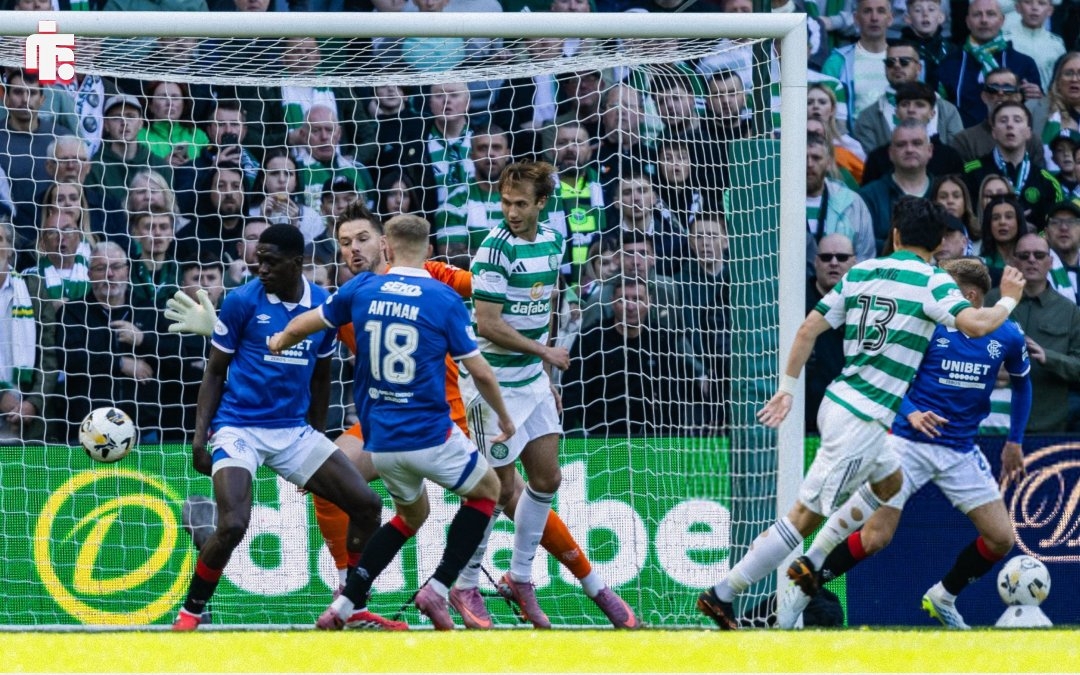
Luke McCowan drifted inside before releasing Arne Engels down the right side. The Belgian whipped a dangerous low cross into the six yard box where Yang Hyun-jun arrived to fire beyond Jack Butland.
Immediately, Rangers players appealed furiously for offside.
Attention centred on Benjamin Nygren, who appeared to be standing directly in front of Butland in an offside position as Yang struck the ball. Referee Nick Walsh allowed the goal initially before VAR official John Beaton launched a review from Clydesdale House.
After a tense delay, the goal stood.
That decision instantly triggered outrage among Rangers supporters, with many believing Nygren was clearly interfering with Butland’s vision and should therefore have caused the goal to be ruled out.
Now, the reasoning behind the decision has become clearer.
The officials effectively judged that while Nygren was standing in an offside position, he was not actively interfering enough with Butland’s ability to save the shot.
Under IFAB Law 11, simply being offside is not automatically enough for a goal to be disallowed. The attacking player must either obstruct the goalkeeper’s line of vision, challenge an opponent for the ball or clearly impact the opponent’s ability to play it.
VAR reportedly decided that Butland was already beaten by the pace and angle of Engels’ pass and Yang’s finish before Nygren’s positioning became relevant.
That interpretation has sparked huge disagreement.
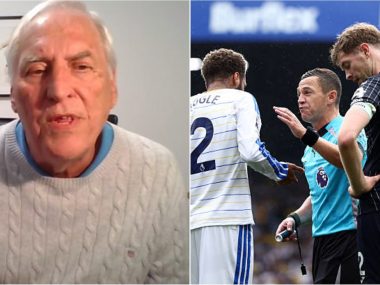
Former FIFA referee Keith Hackett admitted he was stunned the goal survived the review process.
He told Football Insider: “I really am surprised this goal was allowed to stand.
“It appeared to me that there was a Celtic player in an offside position in the line of the vision of the goalkeeper, and therefore interfering with play, interfering with his opponent. Goal should not stand.”
Former Chelsea winger Pat Nevin also admitted Rangers had a legitimate argument based on the written laws of the game.
He said on BBC Sportsound: “It’s one of those ones, as a football person, I am saying let that stand, because he has hit the shot and the Celtic player Nygren is directly in front but he was never getting that shot.
“Many a keeper might say ‘I was getting it, I would have moved’ but if you got and read the rules as written, he is unsighted and you don’t know how he would have reacted.”
The controversy only added further fuel to an already furious afternoon for Rangers supporters after another major flashpoint involving Alistair Johnston’s challenge on Mikey Moore also escaped serious punishment.
Johnston received only a yellow card despite strong complaints from Rangers players and pundits, with several former referees later arguing the Celtic defender should have been sent off.
Still, the equaliser proved the defining moment of the match.
Once Celtic levelled, they completely took control.
Callum McGregor began dominating midfield, Kieran Tierney repeatedly drove Rangers backwards and Daizen Maeda eventually buried the visitors with two second half goals, including a sensational overhead kick that sent Parkhead into chaos.
For Rangers supporters though, much of the anger afterwards focused firmly on VAR and John Beaton’s interpretation of the offside laws.
And even after the explanation behind the decision emerged, many inside Ibrox circles remain convinced the goal should never have stood.

 Nafisa