At Celtic, uncertainty rarely lasts quietly.
It lingers, it builds, and eventually it demands answers.
This season has been one of those chapters. A campaign that began with expectation but quickly drifted into something far more complicated. A shock resignation, a short-lived experiment, and now an interim figure steadying the ship while the bigger question hangs over everything.
Who takes over next.
Because even as Celtic remain in the title race, fighting to keep their season alive on the pitch, there is another battle unfolding behind the scenes. One that could shape the club’s future far beyond this campaign.
The search for a permanent manager.
It has not been straightforward.
Brendan Rodgers’ exit in October sent ripples through the club. What followed only deepened the uncertainty. Wilfried Nancy arrived, lasted just 33 days, and was gone before anything could truly settle. Eight games, a difficult run, and suddenly Celtic were back where they started.
Looking for direction.
Martin O’Neill stepped in to restore some calm, tasked with guiding the team through the remainder of the season. But even as results became the immediate focus, the long-term plan never left the background.
Names began to surface.
Across Europe, across England, across different styles and philosophies. Celtic were watching, assessing, weighing up what kind of identity they wanted next.
And one name, more than most, seemed to fit.
Kieran McKenna.
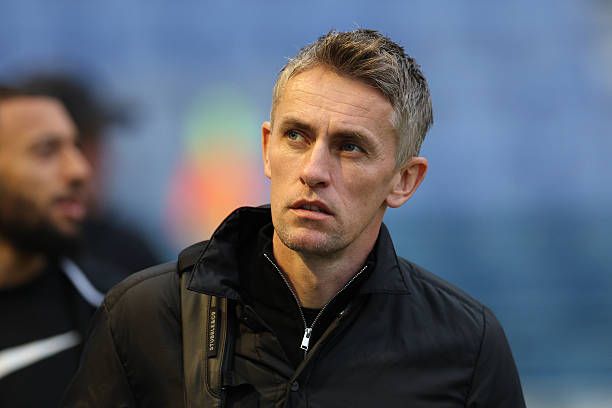
A manager whose rise has been impossible to ignore. From guiding Ipswich Town through consecutive promotions to putting them back on the edge of the Premier League, his reputation has grown with every passing month. Intelligent, modern, progressive. The kind of profile that felt aligned with what Celtic might need.
For many, he looked like the ideal choice.
Which is why what happened next feels so significant.
Because just as speculation began to gather pace, just as the idea of McKenna at Celtic Park started to feel real, a different picture emerged.
David Ornstein, one of the most reliable voices in football, offered an update that quietly shifted the narrative.
“Great question. Given Ipswich’s trajectory and the interest from other Premier League clubs, I’d imagine he’ll be in the English top flight next season.”
That one line changes everything.
It does not close the door completely. But it makes the path far more difficult. Because once the Premier League comes calling, the dynamics shift. Financially, competitively, and in terms of long-term ambition.
And Celtic know that.
They have likely known it for some time.
Which brings the story to where it stands now.
Still searching. Still evaluating. Still trying to find the right figure to lead the next phase of the club.
Because while McKenna may have felt like the perfect fit, reality has a way of redirecting plans. The interest from England, combined with Ipswich’s trajectory, makes it increasingly unlikely that Celtic will be able to pull him away.
And that forces a rethink.
Other names remain in the frame. Robbie Keane. Jens Berthel Askou. Different profiles, different approaches, each bringing their own set of possibilities.
But none quite carry the same universal appeal.
That is where the tension lies.
Because this is not just about filling a role. It is about making the right decision after a season that has already seen too much instability. Getting it wrong again is not an option.
And yet, the clock is ticking.
As the current campaign edges toward its conclusion, the need for clarity grows stronger. Players will want to know. Plans will need to be made. The direction of the club cannot remain uncertain for much longer.
For now, Martin O’Neill continues to lead from the touchline. The title race continues. The immediate focus remains on results.
But behind it all, the bigger story is still unfolding.
One name may be slipping away.
And the search for the next one is only just beginning.