 Nafisa
There are moments in football when a club’s next move feels almost impossible to predict.
Supporters debate potential candidates, media outlets circulate endless rumours, and boardrooms quietly weigh up risk against reward. Sometimes the eventual appointment arrives from left field. Other times, the answer has been staring everyone in the face all along.
Across Scottish football, managerial changes have become almost as common as transfer speculation. Clubs constantly search for the next big thing, hoping to uncover a hidden gem capable of transforming fortunes overnight.
Yet experience, familiarity and proven leadership can often carry far more value than a fashionable appointment.
That conversation has become increasingly relevant in Glasgow.
After another turbulent campaign and more uncertainty surrounding the dugout, Rangers once again find themselves at a crossroads. The Ibrox hierarchy know that the next decision could shape the club’s trajectory for years to come.
And for many observers, there appears to be one candidate who stands above the rest.
Why Derek McInnes feels like the obvious choice:
A managerial shortlist does not always guarantee success.
There is no certainty that a highly-rated coach will adapt to the pressure of a new environment, while some candidates arrive carrying question marks over their recent work.
Occasionally, however, the right appointment becomes impossible to ignore.
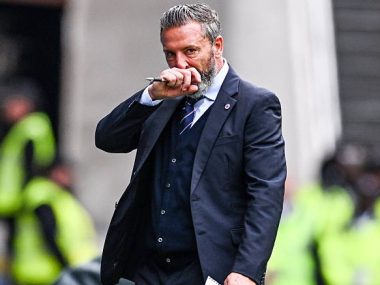
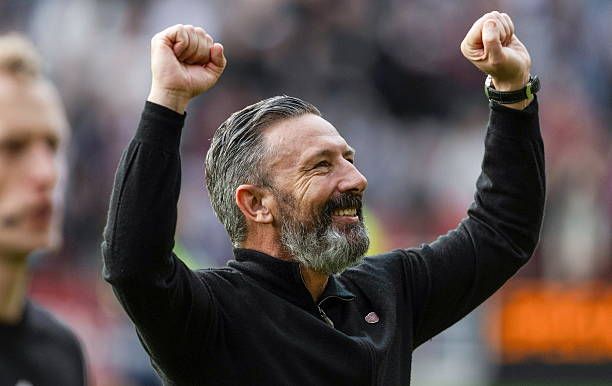
For many, Hearts manager Derek McInnes now falls firmly into that category.
Timing, circumstance and opportunity have aligned in a way that makes the experienced Scottish boss look like the most logical option available to Rangers.
Hearts’ remarkable rise and sudden setbacks
Only a few weeks ago, Hearts appeared to be on the verge of something extraordinary.
The influence of investor Tony Bloom and the club’s data-driven recruitment model had transformed expectations at Tynecastle. Rangers were struggling in third place, while Hearts found themselves pushing for an unlikely title challenge.
A single result at Parkhead could have altered the course of Scottish football history.
Instead, events have unfolded dramatically.
The league title slipped away. Captain and leading scorer Lawrence Shankland completed a move to Rangers. Now the prospect of McInnes heading to Ibrox threatens to deliver another significant blow.
For Hearts supporters, the past month has brought a dramatic shift in momentum.
Röhl’s departure changes everything:
Meanwhile, Rangers have been handed an unexpected opportunity.
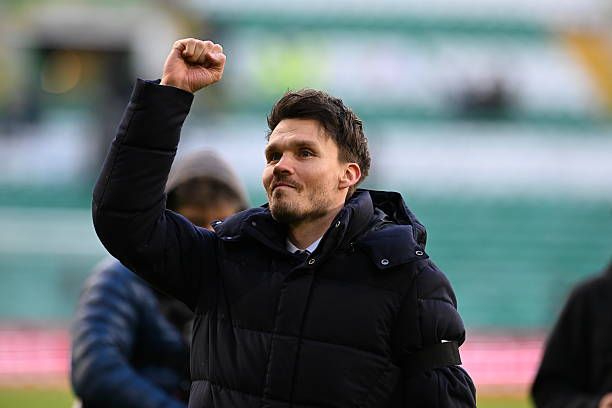
Danny Röhl’s anticipated move to RB Salzburg has transformed the managerial picture at Ibrox.
The German coach arrived with plenty of promise and succeeded in dragging Rangers back into the title race after a difficult start under Russell Martin.
However, the campaign ultimately unravelled.
A disastrous sequence of results following the league split, combined with defeats to Celtic in both domestic cup competitions, left serious doubts surrounding his long-term future.
While Röhl remained popular with sections of the support, questions persisted over whether he possessed the experience and authority required to lead a club of Rangers’ stature.
His departure now offers Rangers a chance to reset.
A manager built for Scottish football
McInnes brings something very different.
Unlike many modern coaches, he understands every aspect of Scottish football. He knows the league, the transfer market, the expectations and the relentless pressure that accompanies managing a major Glasgow club.
His work at Aberdeen remains highly respected despite his eventual departure.
During his time at Pittodrie, he consistently guided the club into European competition and established them as Celtic’s closest challengers for several seasons.
Since leaving Aberdeen, he has continued to strengthen his reputation.
His spell at Hearts only reinforced the belief that he remains one of the strongest managers operating in Scotland today.
The Rangers opportunity returns
Interestingly, this is not the first time McInnes has been linked with the Rangers job.
Back in 2017, he came incredibly close to accepting the role before ultimately performing a dramatic late U-turn.
The decision remains one of Scottish football’s great “what if” stories.
At the time, he relied heavily on advice from two hugely influential figures in his career: Morton legend Allan McGraw and Rangers icon Walter Smith.
Reflecting on that period, McInnes once admitted:
“I felt that Walter wanted me to be the Rangers manager,” he said.
“but he also had his concerns for me with it. It was his advice and, while he left me in no doubt that it was my decision, he was involved in every step of the way there. The gaffer had an influence on most of my big decisions.”
Now, years later, the opportunity has returned.
Can McInnes succeed where others failed?
No appointment comes with guarantees.
The reality is that Celtic have dominated Scottish football for much of the last decade and a half, winning 14 of the previous 15 league titles.
Even elite managers would face a difficult task attempting to break that stranglehold.
Yet Rangers are searching for stability after a remarkable period of turnover.
McInnes would become the sixth permanent manager since Steven Gerrard departed for Aston Villa in November 2021.
The tenures of Michael Beale, Philippe Clement, Russell Martin and Danny Röhl all proved shorter than anticipated.
Rangers now appear desperate for continuity.
A chance that may never come again
For McInnes, the attraction is obvious.
This is not simply another managerial opportunity.
It is the chance to lead the club he supported as a boy.
Few managers receive one opportunity to manage their childhood team.
Even fewer receive a second.
With Rangers seemingly ready to place their trust in him once again, McInnes now faces a career-defining decision.
Turn it down a second time, and the door may never reopen.
Accept it, and he could finally get the opportunity he came so close to taking almost a decade ago.


 Nafisa